
Specialists in antique and decorative furniture, based in Sussex.

White’s Antiques
'%3e%3cpath fill='%23012169' d='M0 0v30h60V0z'/%3e%3cpath stroke='%23fff' stroke-width='6' d='m0 0 60 30m0-30L0 30'/%3e%3cpath stroke='%23C8102E' stroke-width='4' d='m0 0 60 30m0-30L0 30' clip-path='url(%23b)'/%3e%3cpath stroke='%23fff' stroke-width='10' d='M30 0v30M0 15h60'/%3e%3cpath stroke='%23C8102E' stroke-width='6' d='M30 0v30M0 15h60'/%3e%3c/g%3e%3c/svg%3e) UK
UK
Address
Unit 10 The Vinery, Arundel Road
Poling, West Sussex
United Kingdom
BN18 9PY
Opening times
Monday-Friday 10-4 Saturday by appointment
Mobile
+447717 321455
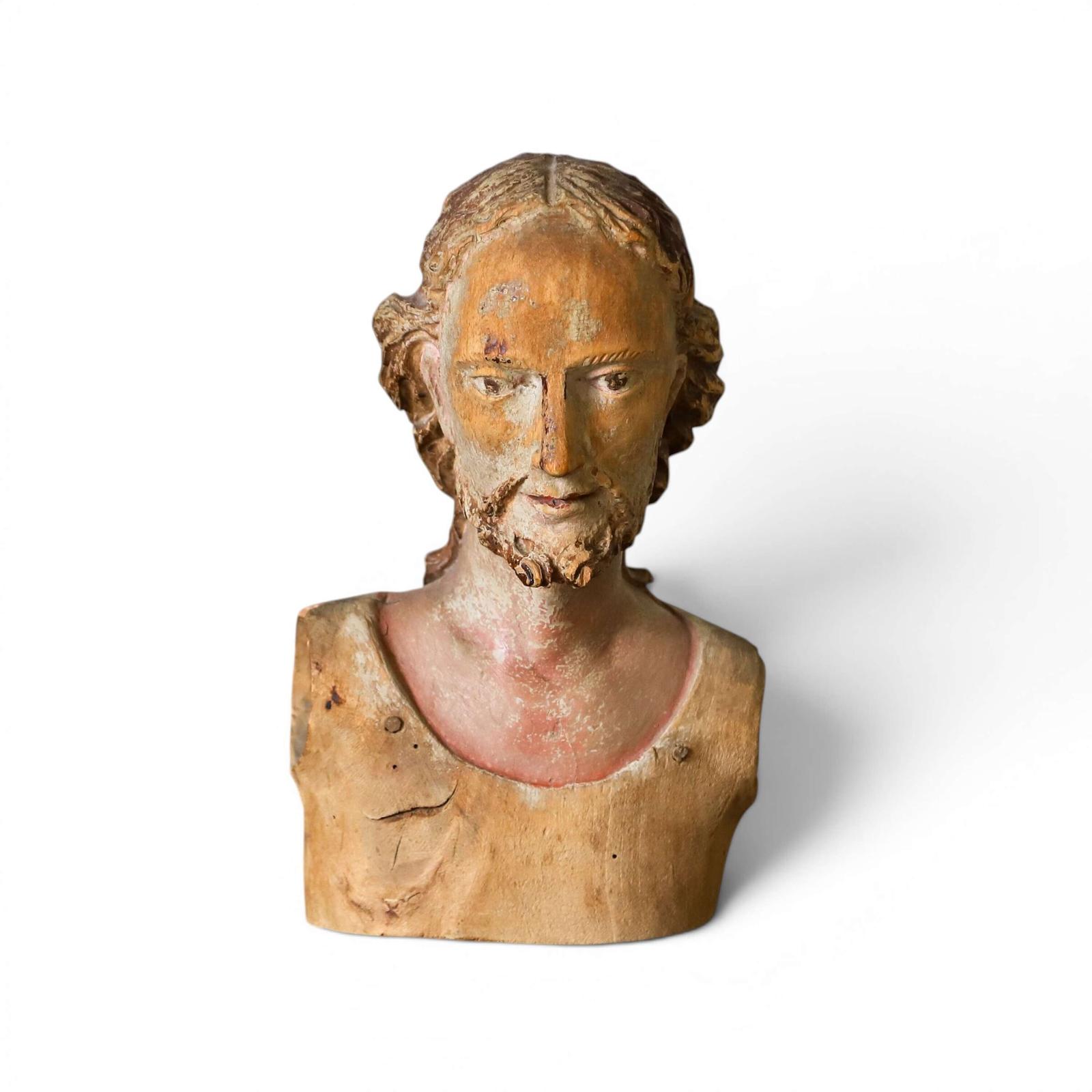
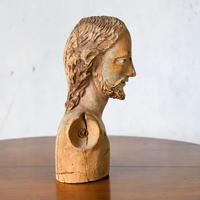
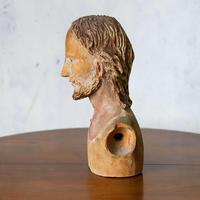
18th Century Polychrome Olive Wood Bust - Carved Head of Christ, Italian, Sicilian
REF: CA026 / LA570811
£350
€407
$465
Secure Payments By
LoveAntiques Dealersince Feb 2021Approved item984 sales by dealer
LoveAntiques Dealersince Feb 2021Approved item984 sales by dealer
Description
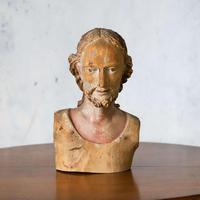
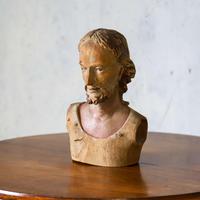
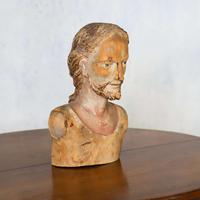
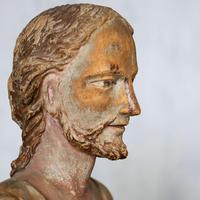
An 18th‑century carved and polychrome olive wood bust of Christ, likely Italian and possibly Sicilian. Finely modelled with traces of original paint, this devotional head retains a moving sense of presence. With age‑related wear, cut marks and historic worming, it stands as an evocative survivor of early religious craftsmanship.
Why We Love This … There is a quiet, contemplative power to this small devotional bust. Carved from olive wood - a material long associated with sacred objects - the sculptor has captured a gentle, introspective expression that feels deeply human. The surviving polychromy softens the features, while the age‑related wear only enhances its authenticity.
Pieces like this were never made to impress; they were made to comfort, to accompany prayer, to be held close. That intimacy still radiates from the carving today.
At a Glance – Appeal, Desirability & Collectibility:
• Date: 18th Century
• Origin: Italy, possibly Sicily
• Materials: Carved olive wood with polychrome paint
Condition: Fair; cut mark and historic worm holes consistent with age and devotional use
Notable Details: Expressive carving; traces of original paint; warm olive‑wood grain
Versatility: Works beautifully in traditional interiors, devotional groupings, or as a sculptural accent
Collectibility: Strong - early religious carvings in olive wood are increasingly sought after
Delivery is not included - please use the Delivery Quote tab prior to purchase
Heritage, History & Craftsmanship:
This finely carved bust of Christ is an evocative example of 18th‑century Italian devotional art, with stylistic traits suggesting a Sicilian origin. Olive wood was a favoured material in southern Italy for small religious sculptures: its density, warmth and fine grain allow for expressive modelling, while its symbolic associations with peace and the Holy Land made it especially appropriate for sacred subjects.
The sculptor has shaped the features with sensitivity - the downcast eyes, the softened cheekbones, the gentle fall of the hair - all rendered with a quiet realism typical of provincial devotional work. Traces of original polychrome survive across the surface, offering a glimpse of how the bust would once have appeared in a small chapel or private oratory.
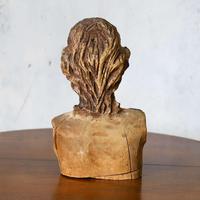
The cut mark and historic worming are entirely consistent with age and use, and do not detract from the piece’s integrity. Instead, they speak to its long life as an object of faith, handled, moved, and cherished over generations.
Social History:
In the 18th century, small devotional busts such as this were common in southern Italy, where domestic altars and personal shrines formed an important part of daily religious practice. These pieces were not grand ecclesiastical commissions; they were intimate objects intended for contemplation, prayer and comfort.
Sicily, in particular, produced a wealth of expressive religious carvings during this period, often characterised by warm timbers, soft modelling and restrained polychromy - qualities clearly present in this example.
Condition:
• Fair, consistent with age
• Cut mark to the reverse
• Historic worm holes present
• Traces of original polychrome
• Surface wear appropriate to an 18th‑century devotional object
• Structurally stable
Provenance:
• From a dealer specialising in traditional antiques
• 18th‑century Italian, possibly Sicilian
• Private source
Terminology by Style:
• Polychrome: Painted decoration applied to carved wood
• Devotional Sculpture: Small religious works intended for private contemplation
• Olive Wood: Dense, fine‑grained timber traditionally used for sacred carvings
• Provincial Italian Carving: Regional craftsmanship with expressive, humanised modelling
• Historic Worming: Age‑related woodworm activity, now inactive
Styling Suggestions:
This bust works beautifully on a console, bookshelf or side table where its intimate scale can be appreciated. It pairs well with candles, books, or other devotional objects, and sits comfortably within both traditional and contemporary interiors. Soft lighting will enhance the warmth of the olive wood and the subtle remnants of polychrome
Explore Every Facet:
These images form an essential part of the condition report and are intended to provide complete transparency and confidence in your purchase. The modelling, surface wear and traces of paint are best appreciated in person, where the light reveals the depth and character of the carving.
Sustainable Style:
Thank you for considering this 18th‑century devotional carving - a choice that is both culturally and environmentally responsible … in every sense, the most sustainable item is the one that endures. Antique wooden sculpture is inherently sustainable, having already endured centuries of life. Choosing pieces like this promotes longevity, cultural heritage and thoughtful collecting.
Purchase with Confidence:
White’s Antiques carefully selects every item for authenticity, character, craftsmanship, and decorative presence - ensuring that each piece carries both aesthetic and historic value. Every item is described and photographed with care, offering complete transparency and confidence in your purchase.
We are an established and trusted resource for both trade and private collectors. You are warmly invited to visit our Showroom at The Vinery, Poling, West Sussex, to experience our curated collections firsthand, explore the stories behind each piece, and appreciate these timeless furnishings in person.
Delivery & Collection Information:
• Delivery is not included - please use the Delivery Quote tab prior to purchase
• Collection welcome from our Sussex showroom
• Local delivery available
• Nationwide couriers arranged on request
measurements
Height:
27 cm
Width:
13.500 cm
Depth:
16 cm
declaration
White’s Antiques has clarified that the 18th Century Polychrome Olive Wood Bust - Carved Head of Christ, Italian, Sicilian (LA570811) is genuinely of the period declared with the date/period of manufacture being 18th Century
additional info
Period:
Category:
Material:
Date of Manufacture:
18th Century
location
This 18th Century Polychrome Olive Wood Bust - Carved Head of Christ, Italian, Sicilian is located in United Kingdom
Share:
Ask a question
Please note,
This dealer does not accept instant online payment for this item.
To buy this item please email the dealer using the enquiry form below.
A selection of items from White’s Antiques
White’s Antiques has 333 items available.Antique Scandinavian Folk Art Bird Sculpture - Hand Carved Wood & Painted, Sweden c.1900
£ 395
€460$524
White’s Antiques
Highly Decorative Pair of Mid‑Century Seal Sculptures - 1950s Carved Figures
£ 175
€204$232
White’s Antiques