

Specialists in antique and decorative furniture, based in Sussex.


White’s Antiques
'%3e%3cpath fill='%23012169' d='M0 0v30h60V0z'/%3e%3cpath stroke='%23fff' stroke-width='6' d='m0 0 60 30m0-30L0 30'/%3e%3cpath stroke='%23C8102E' stroke-width='4' d='m0 0 60 30m0-30L0 30' clip-path='url(%23b)'/%3e%3cpath stroke='%23fff' stroke-width='10' d='M30 0v30M0 15h60'/%3e%3cpath stroke='%23C8102E' stroke-width='6' d='M30 0v30M0 15h60'/%3e%3c/g%3e%3c/svg%3e) UK
UK
Address
Unit 10 The Vinery, Arundel Road
Poling, West Sussex
United Kingdom
BN18 9PY
Opening times
Monday-Friday 10-4 Saturday by appointment
Mobile
+447717 321455
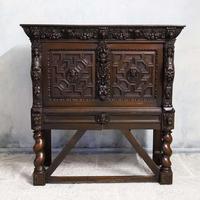
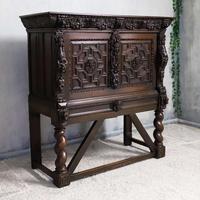
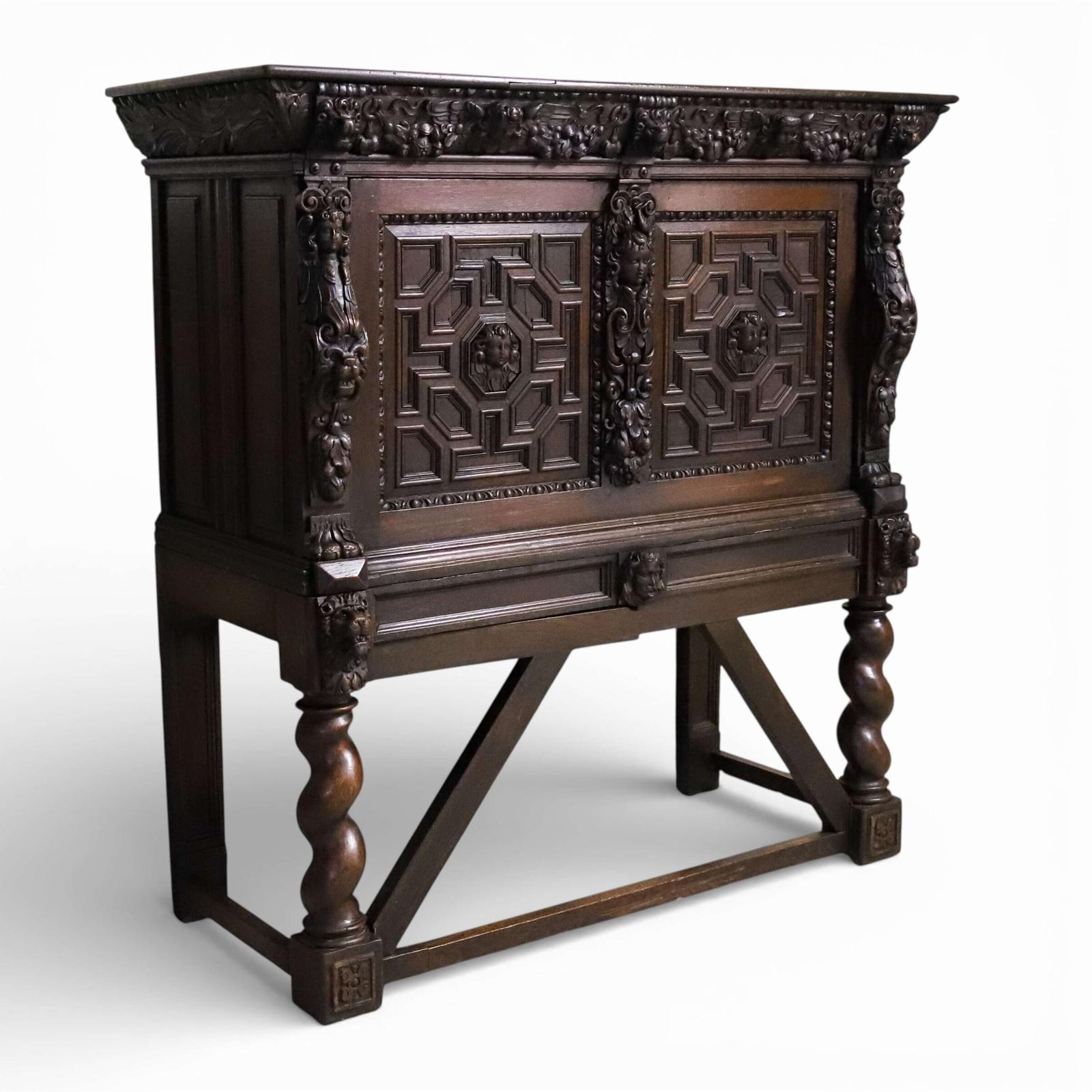
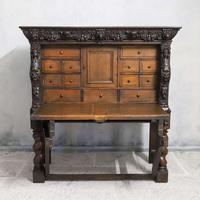
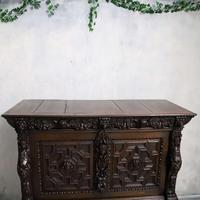
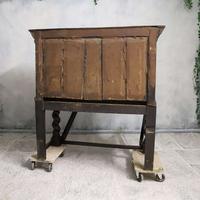
19th Century Flemish Carved Oak Cabinet on Stand with Lion Masks c.1850-1880
REF: WA182 / LA557529
£1,450
€1,686
$1,917
Secure Payments By
LoveAntiques Dealersince Feb 2021Approved item984 sales by dealerAvailable for local pick-up
LoveAntiques Dealersince Feb 2021Approved item984 sales by dealerAvailable for local pick-up
Description
A richly carved Flemish oak cabinet with lion masks, grotesques and architectural panels, raised on a decorative oak stand
At a Glance - Appeal, Desirability & Collectibility
• Origin: Flemish / Northern European
• Date: Circa 1680
• Material: Solid oak
• Construction: Panelled cabinet with carved façade, raised on an oak stand
• Decoration: Lion head masks, cherubic and grotesque masks, scrolling foliage and geometric panels
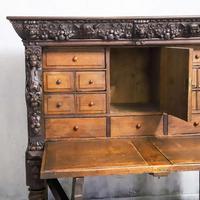
• Doors: Twin panelled doors enclosing fitted interior drawers
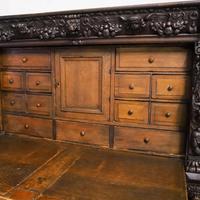
• Interior: Multiple small drawers over a central cupboard compartment
• Finish: Richly patinated oak with deep colour and surface wear consistent with age
• Condition: Good antique condition with historic wear, marks and minor variations consistent with age and use
• Dimensions: H: 148cm (58.3") | W: 143cm (56.3") | D: 64cm (25.2")
• Drop front writing height when open 77cm (30.3")
• Drop front depth 60cm (23.6") and 109cm (42.9") wide
• Delivery is not included - please use the Request Delivery Quote feature located beside the ‘Add to Basket’ tab before completing your order
• Desirability:
• Strong Renaissance Revival influence with bold architectural carving
• Lion masks offer powerful symbolic and decorative appeal
• Rare to find with such depth of carving and intact interior configuration
• Ideal for collectors of Northern European furniture or statement interiors
• Equally suited to traditional, eclectic or architectural modern settings
Heritage, Character & Craftsmanship
This impressive carved oak cabinet dates from the late 17th century and is best attributed to the Flemish or Northern European tradition, where deeply worked oak furniture continued to celebrate Renaissance forms, symbolism and architectural strength long after they had faded elsewhere.
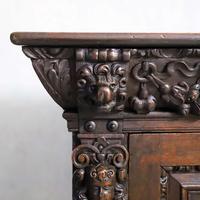
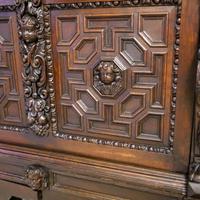
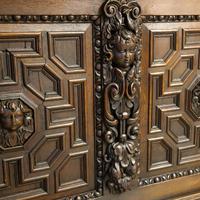
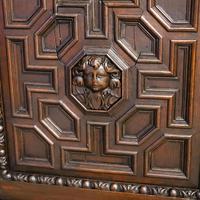
The façade is richly carved with bold geometric panels centred by expressive masks, flanked by vertical carved pilasters and crowned by a frieze of scrolling foliage populated with lion heads and grotesque faces. These elements are not merely decorative: they speak to a long tradition of symbolic carving, where lions represented strength, guardianship and authority, while grotesque and cherubic masks added both visual drama and protective connotations.
The cabinet opens to reveal a thoughtfully arranged interior of small drawers over a central cupboard space, originally intended for the organised storage of documents, valuables or household accounts. Raised on a decorative and robust oak stand, the piece gains presence and practicality while maintaining stylistic sympathy with the upper cabinet.
Brief Historical Note
Cabinets of this type were status pieces, designed to demonstrate both craftsmanship and cultural literacy. The inclusion of lion masks reflects a long-standing heraldic and architectural language common across Flemish, Dutch and Northern European design, where such imagery conveyed power, vigilance and continuity with the past.
Styling Suggestions
• Use as a statement piece in a hall, library or dining room
• Style against pale walls to allow the carving to read clearly
• Pair with stone, linen, leather or muted metals for textural balance
• Ideal for collectors mixing antiques with contemporary architecture
• Works beautifully beneath large-scale artwork or tapestries
• Use interior drawers for jewellery, documents or curated collections
• In modern spaces, allow it to stand alone as a sculptural anchor
Explore Every Facet
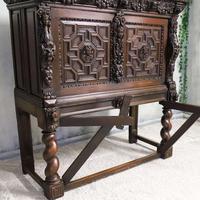
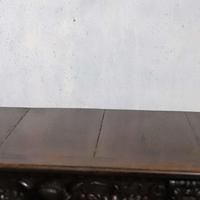
Our high-resolution photographs allow you to study every aspect of this cabinet in detail, exactly as you would in person. These images form an essential part of the condition report and are provided to ensure complete transparency and confidence. Please examine the depth of carving, the expressive lion and mask details, the interior drawer configuration, and the surface patina developed over time.
Sustainable Style
Thank you for considering this antique carved oak cabinet - a choice that honours design, heritage, and the environment …in every sense, the most sustainable item is the one that endures
Antique furniture represents the most sustainable form of design: crafted from existing materials, made to endure, and preserved through skilled restoration rather than replacement. By choosing antiques, you help sustain traditional craftsmanship, reduce waste, and keep historic skills alive for future generations.
Purchase with Confidence
White’s Antiques carefully selects every item for authenticity, character, craftsmanship, and decorative presence - ensuring that each piece carries both aesthetic and historic value. Each item is described and photographed with care, ensuring complete transparency and confidence in your purchase. We are an established and successful business serving both trade and private collectors. You are warmly invited to visit our shop at 53 High Street, Arundel, and our Showroom at The Vinery, Poling, West Sussex, to experience our curated collections firsthand, explore the stories behind each antique, and appreciate these timeless treasures in person.
measurements
Height:
148 cm
Width:
143 cm
Depth:
64 cm
Drop front writing height when open 77cm (30.3")
Drop front depth 60cm (23.6") and 109cm (42.9") wide
declaration
White’s Antiques has clarified that the 19th Century Flemish Carved Oak Cabinet on Stand with Lion Masks c.1850-1880 (LA557529) is genuinely of the period declared with the date/period of manufacture being circa 1680
condition
Good antique condition with historic wear, marks and minor variations consistent with age and use.
location
This 19th Century Flemish Carved Oak Cabinet on Stand with Lion Masks c.1850-1880 is located in United Kingdom
Share:
Ask a question
Please note,
This dealer does not accept instant online payment for this item.
To buy this item please email the dealer using the enquiry form below.
A selection of items from White’s Antiques
White’s Antiques has 333 items available.19th Century English Oak Gothic Revival Library Table with Leather Writing Surface
£ 5,950
€6,920$7,866
White’s Antiques
1930s English Oak Sideboard - Carolean Revival - Finely Carved with Barley-Twist Supports
£ 840
€977$1,110
White’s Antiques
Original Condition 19th Century French Sofa or Chaise - Lion Paw Feet, Restoration Piece
£ 1,550
€1,803$2,049
White’s Antiques