
Specialists in antique and decorative furniture, based in Sussex.
White’s Antiques
'%3e%3cpath fill='%23012169' d='M0 0v30h60V0z'/%3e%3cpath stroke='%23fff' stroke-width='6' d='m0 0 60 30m0-30L0 30'/%3e%3cpath stroke='%23C8102E' stroke-width='4' d='m0 0 60 30m0-30L0 30' clip-path='url(%23b)'/%3e%3cpath stroke='%23fff' stroke-width='10' d='M30 0v30M0 15h60'/%3e%3cpath stroke='%23C8102E' stroke-width='6' d='M30 0v30M0 15h60'/%3e%3c/g%3e%3c/svg%3e) UK
UK
Address
Unit 10 The Vinery, Arundel Road
Poling, West Sussex
United Kingdom
BN18 9PY
Opening times
Monday-Friday 10-4 Saturday by appointment
Mobile
+447717 321455
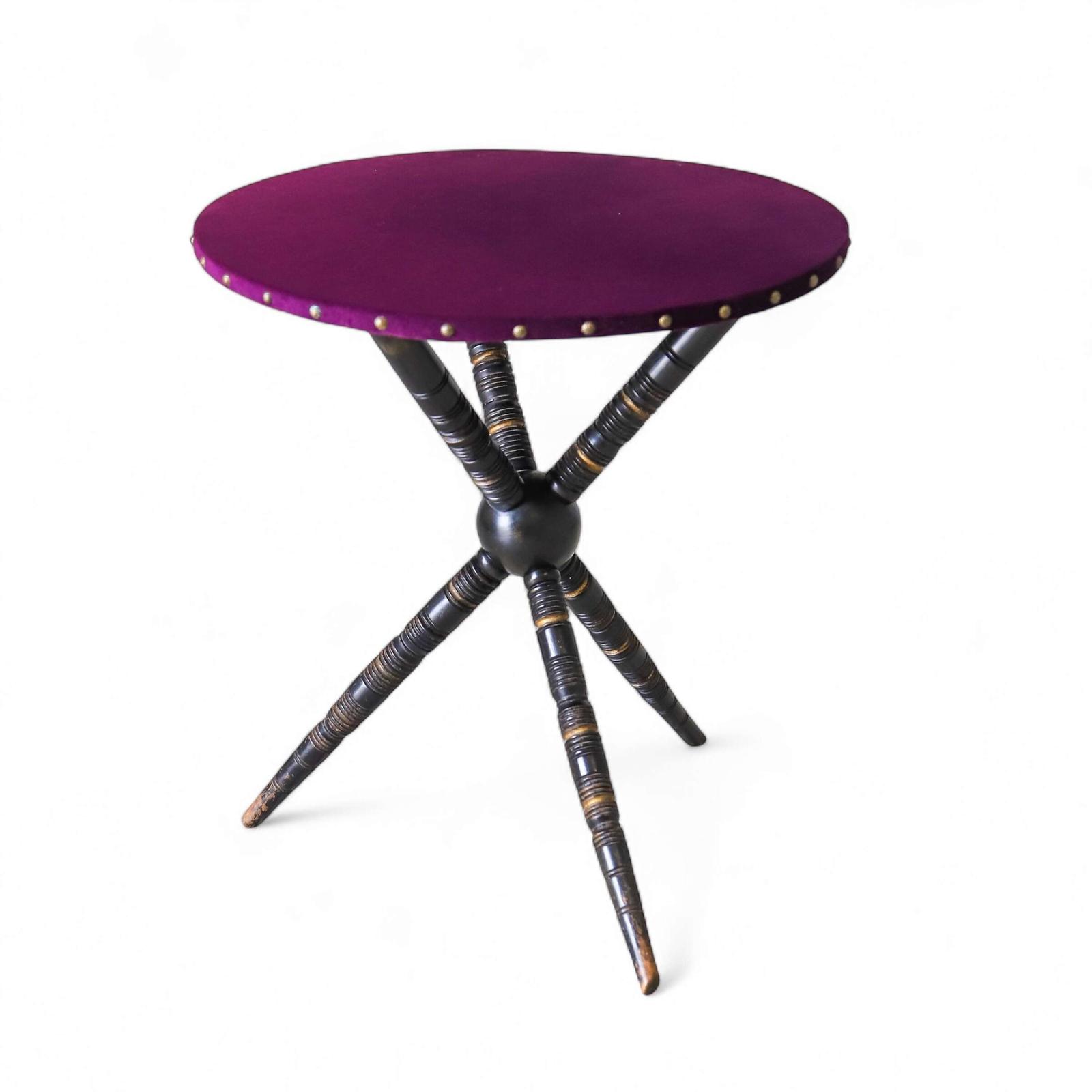
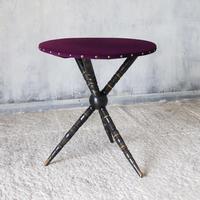
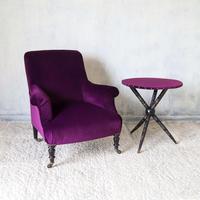
Aesthetic Movement Circular Ebonised ‘Gypsy Table’ in Designers Guild Purple Velvet
REF: AG010 / LA543255
£340
€397
$458
Secure Payments By
LoveAntiques Dealersince Feb 2021Approved item914 sales by dealerAvailable for local pick-up
LoveAntiques Dealersince Feb 2021Approved item914 sales by dealerAvailable for local pick-up
Description
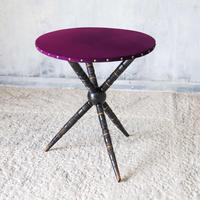
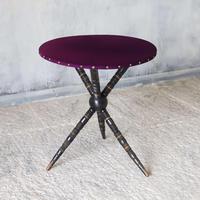
Aesthetic Movement Circular Ebonised ‘Gypsy Table’ in Designers Guild Purple Velvet
A velvet-topped flourish from the parlours of Victorian bohemia
Origin: England, late Victorian era (circa 1870–1900)
Movement: Aesthetic Movement - ‘art for art’s sake’ design philosophy
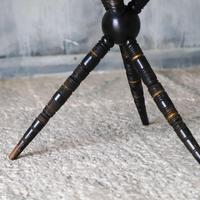
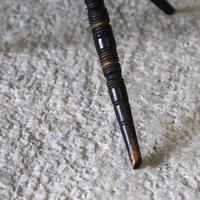
Material: Ebonised wood with gilded accents and turned tripod legs
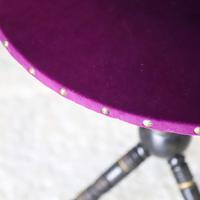
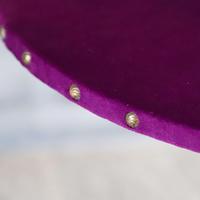
Upholstery: Recovered in Designers Guild purple velvet with original studs
Design: Circular top, sculptural base with central ball convergence
Condition: Good antique condition - age-appropriate wear to ebonised finish
Dimensions: H: 60cm (23.6") | Diameter of rim: 56cm (22")
Delivery: Not included - Please use the Request Delivery Quote feature located next to the ‘Add to Basket’ tab before completing your order
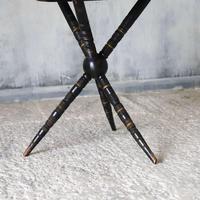
This decorative Gypsy Table is a striking example of late Victorian design, crafted during the Aesthetic Movement - a cultural moment that championed beauty, whimsy, and ‘art for art’s sake’. Raised on hand turned tripod legs with gilded accents, the table’s sculptural base converges into a central ball, offering both balance and flair.
The circular top has been recovered in Designers Guild purple velvet, a rich and theatrical choice that echoes the table’s bohemian roots. Original studs line the edge, preserving its historic charm. These tables were often used for parlour games, palm readings, and tarot - rituals of curiosity and connection in more liberal Victorian homes.
Styling Notes
Pair with the matching Napoleon III armchair AG009 Antique Napoleon III Armchair recovered in Designers Guild purple velvet for a dramatic vignette in a reading nook or dressing room. Alternatively, style with a crystal lamp, antique cards, or a small vase of wildflowers to evoke its fortune-telling past. This is a piece that invites conversation, mystery, and a touch of theatrical elegance.
measurements
Height:
60 cm
Diameter:
56 cm
declaration
White’s Antiques has clarified that the Aesthetic Movement Circular Ebonised ‘Gypsy Table’ in Designers Guild Purple Velvet (LA543255) is genuinely of the period declared with the date/period of manufacture being circa 1870
additional info
Period:
Origin:
Date of Manufacture:
circa 1870
location
This Aesthetic Movement Circular Ebonised ‘Gypsy Table’ in Designers Guild Purple Velvet is located in United Kingdom
Share:
Ask a question
Please note,
This dealer does not accept instant online payment for this item.
To buy this item please email the dealer using the enquiry form below.
A selection of items from White’s Antiques
White’s Antiques has 404 items available.Napoleon III Armchair & Aesthetic Movement Gypsy Table in Designers Guild Purple Velvet
£ 1,200
€1,402$1,618
White’s Antiques
Antique Napoleon III Armchair Recovered in Designers Guild Purple Velvet
£ 940
€1,098$1,267
White’s Antiques
Unusual Sheraton Design Reading Chair in Red Leather - English c.1890
£ 3,200
€3,739$4,315
White’s Antiques