
Specialists in antique and decorative furniture, based in Sussex.
White’s Antiques
'%3e%3cpath fill='%23012169' d='M0 0v30h60V0z'/%3e%3cpath stroke='%23fff' stroke-width='6' d='m0 0 60 30m0-30L0 30'/%3e%3cpath stroke='%23C8102E' stroke-width='4' d='m0 0 60 30m0-30L0 30' clip-path='url(%23b)'/%3e%3cpath stroke='%23fff' stroke-width='10' d='M30 0v30M0 15h60'/%3e%3cpath stroke='%23C8102E' stroke-width='6' d='M30 0v30M0 15h60'/%3e%3c/g%3e%3c/svg%3e) UK
UK
Address
Unit 10 The Vinery, Arundel Road
Poling, West Sussex
United Kingdom
BN18 9PY
Opening times
Monday-Friday 10-4 Saturday by appointment
Mobile
+447717 321455
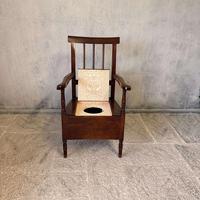
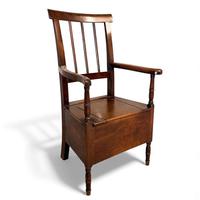
Oak / Walnut Commode Chair c.1680-1720 | English Antique Chair
REF: WA179 / LA557546
£450
€524
$597
Secure Payments By
LoveAntiques Dealersince Feb 2021Approved item984 sales by dealerAvailable for local pick-up
LoveAntiques Dealersince Feb 2021Approved item984 sales by dealerAvailable for local pick-up
Description
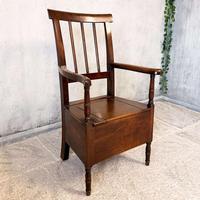
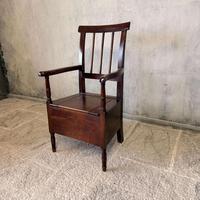
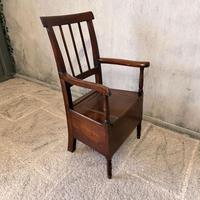
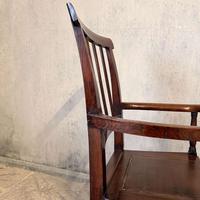
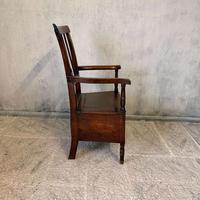
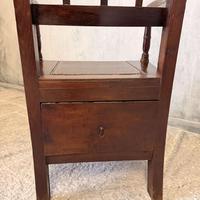
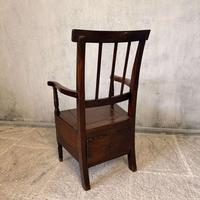
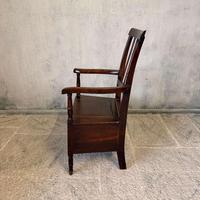
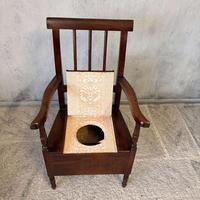
A rare, early Oak/Walnut Commode Chair, circa 1680-1720 - elegant armchair form with discreet function, superb patina and excellent condition
Appeal, Desirability & Collectibility
England, late 17th century (c.1680–1705), William & Mary / early Queen Anne period
or it could be a rare early Georgian (George I 1714–1727) commode chair of architectural, armchair form
Likely oak construction, rich colour and exceptional natural patina
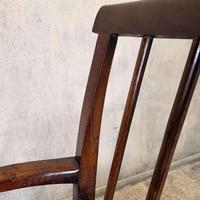
Elegant swept arms, slender turned supports and vertical splat back
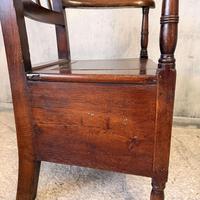
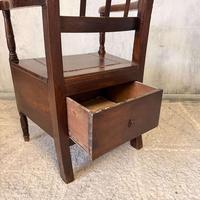
Discreet commode function accessed via the rear panel
Excellent structural condition; solid, sturdy and fully functional
Thoroughly sanitised and suitable for contemporary use if required
Increasingly sought after as furniture of social and domestic history
Dimensions: H: 109cm (42.9") | W: 63cm (24.8") | D: 52cm (20.5")
Seat height approximately 46cm (18.1")
Delivery is not included – please use the Request Delivery Quote feature before completing your order
Date & Period
This exceptionally fine early commode chair dates to the late 17th century, circa 1680–1705, spanning the William & Mary period and the early years of Queen Anne, and displaying design characteristics that would later inform early Georgian furniture.
It bears all the hallmarks of authentic period craftsmanship. The proportions, the confident yet restrained sweep of the arms, the vertical splat back and the turned legs are entirely consistent with known English examples from circa 1680 onwards, placing this piece firmly at the threshold between late Stuart and early Georgian design.
While the Georgian era formally begins in 1714, furniture of this transitional period is widely recognised for establishing the restrained, architectural language that followed. The chair’s form, proportions and construction firmly place it before the widespread adoption of Queen Anne and later Georgian stylistic developments.
Dating Rationale
The dating of this chair is supported by several key features: the rectilinear, architectural construction; the absence of cabriole legs; the restrained turned supports; and the simple vertical back with plain top rail. These elements are characteristic of late Stuart domestic furniture, predating the lighter forms and decorative vocabulary introduced during the Queen Anne and later Georgian periods. The overall simplicity, combined with the quality of craftsmanship and the deep, naturally evolved patina, further supports a date in the late 17th to very early 18th century.
Description – Form, Function & Social History
Unlike later Victorian examples, this chair was conceived with discretion and refinement, combining domestic necessity with the visual language of a well-made armchair. The commode is accessed discreetly through the rear, allowing the chair to remain visually unobtrusive within a room - an important consideration in polite households of the period.
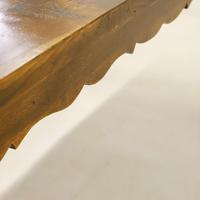
The surface displays a wonderful, lustrous patina, built only through centuries of use, careful handling and time. The chair is in excellent condition for its age: structurally sound, robust, and reassuringly solid. It has been fully cleaned and sanitised, and all elements are complete.
Historically, such chairs formed an important part of household life, particularly for the elderly or infirm, and they remain relevant today. In contrast to modern clinical designs, an antique commode chair offers privacy, dignity and visual harmony, and is still used in refined interiors where function must sit quietly alongside form. When fitted with a cushion, it also serves convincingly as occasional seating.
An intriguing anecdote - often shared in France, where these chairs are sometimes referred to as “chaises au sel” - suggests that during periods of punitive salt taxation, contraband salt was concealed within such chairs, guarded by the presence of the household’s eldest woman. Whether charming folklore or partial truth, it underlines how deeply embedded such furniture was in everyday life.
This is not a novelty piece, but a serious and historically significant survivor, offering both beauty and narrative in equal measure.
measurements
Height:
109 cm
Width:
63 cm
Depth:
52 cm
Length:
46 cm
Seat Height approximately 46cm
declaration
White’s Antiques has clarified that the Oak / Walnut Commode Chair c.1680-1720 | English Antique Chair (LA557546) is genuinely of the period declared with the date/period of manufacture being circa 1680-1720
additional info
Category:
Origin:
Date of Manufacture:
circa 1680-1720
location
This Oak / Walnut Commode Chair c.1680-1720 | English Antique Chair is located in United Kingdom
Share:
Ask a question
Please note,
This dealer does not accept instant online payment for this item.
To buy this item please email the dealer using the enquiry form below.
A selection of items from White’s Antiques
White’s Antiques has 333 items available.Early 20th Century English Carved Oak Side Chairs Upholstered in Zoffany Fabric
£ 850
€989$1,128
White’s Antiques
Matched Pair of Scottish Oak Armorial Clan Chairs Velvet Upholstery Heraldic Crests c.1650
£ 2,300
€2,676$3,054
White’s Antiques
19th Century English Walnut Davenport Desk - Antique Writing Desk with Leather Top
£ 680
€791$903
White’s Antiques