

Specialists in antique and decorative furniture, based in Sussex.
White’s Antiques
'%3e%3cpath fill='%23012169' d='M0 0v30h60V0z'/%3e%3cpath stroke='%23fff' stroke-width='6' d='m0 0 60 30m0-30L0 30'/%3e%3cpath stroke='%23C8102E' stroke-width='4' d='m0 0 60 30m0-30L0 30' clip-path='url(%23b)'/%3e%3cpath stroke='%23fff' stroke-width='10' d='M30 0v30M0 15h60'/%3e%3cpath stroke='%23C8102E' stroke-width='6' d='M30 0v30M0 15h60'/%3e%3c/g%3e%3c/svg%3e) UK
UK
Address
Unit 10 The Vinery, Arundel Road
Poling, West Sussex
United Kingdom
BN18 9PY
Opening times
Monday-Friday 10-4 Saturday by appointment
Mobile
+447717 321455
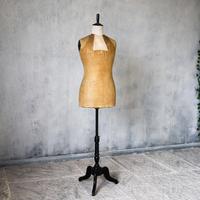
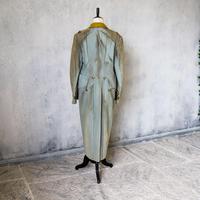
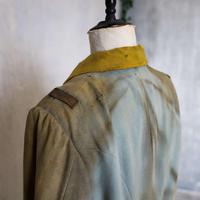
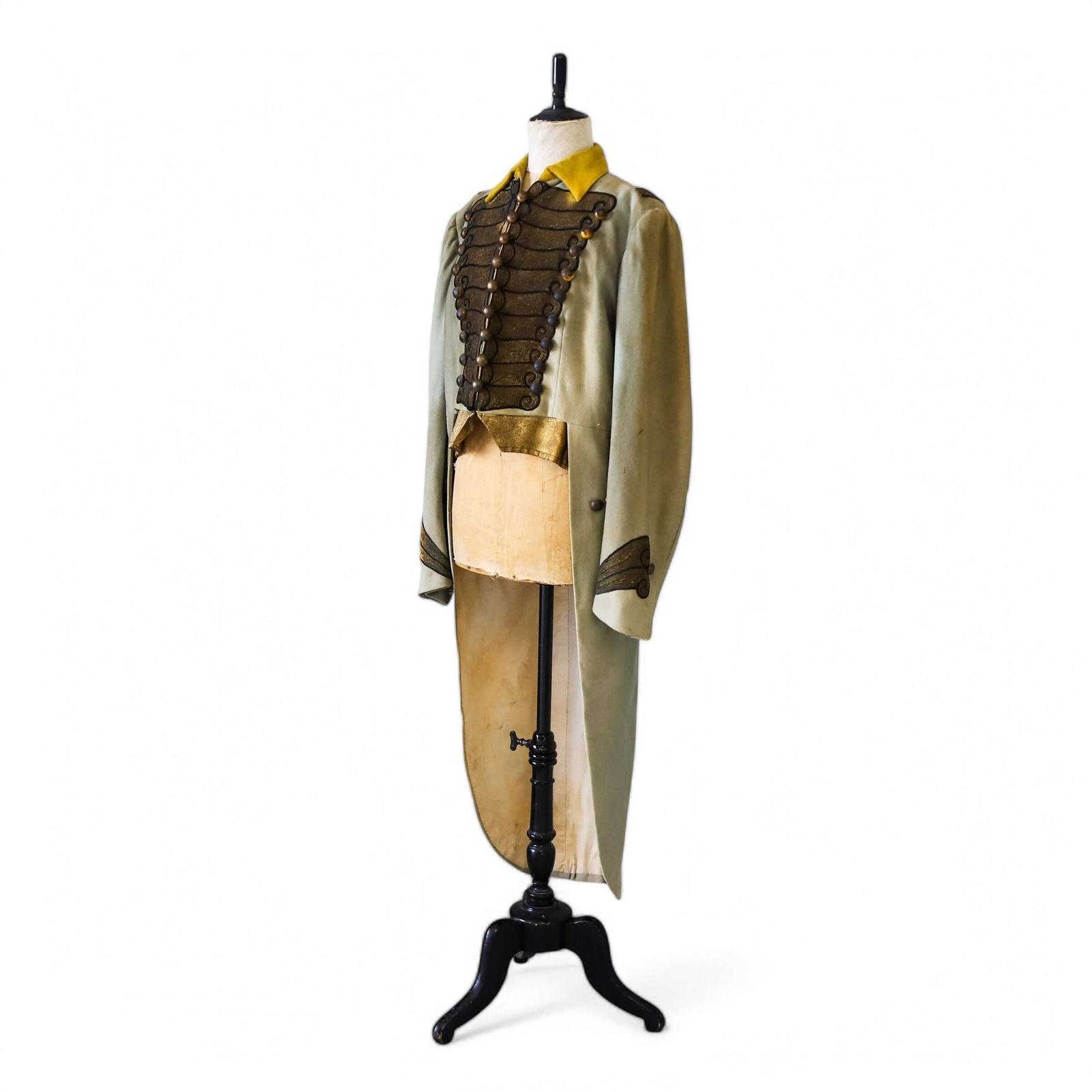
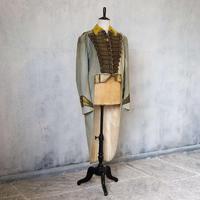
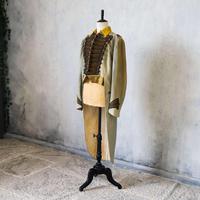
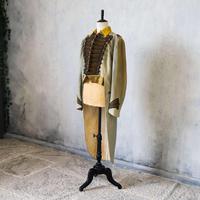
Stockman of Paris Mannequin 30247 c 1900 & Costume Coat
REF: BR042 / LA544708
£575
€672
$775
Secure Payments By
LoveAntiques Dealersince Feb 2021914 sales by dealerFree DeliveryAvailable for local pick-up
LoveAntiques Dealersince Feb 2021914 sales by dealerFree DeliveryAvailable for local pick-up
Description
Stockman of Paris Mannequin 30247 c 1900 & Costume Coat
French early 20th Century circa 1900
Stockman Atelier
Stockman of Paris Mannequin 302472
Antique Theatrical Dress Frock Coat created by B.J. Simmons & Co.3
Presented in original condition
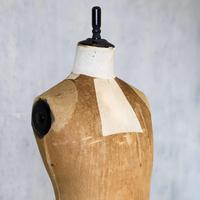
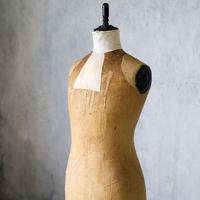
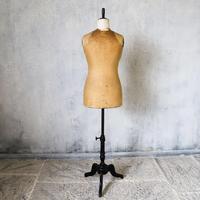
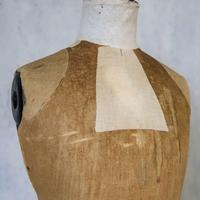
Papier mâché & fabric covered torso
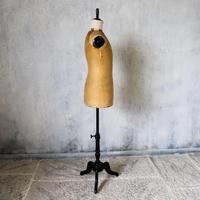
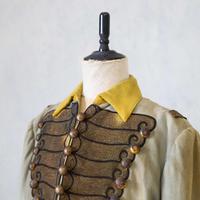
Torso with ebonised hand turned neck finial and ebonised arm stops
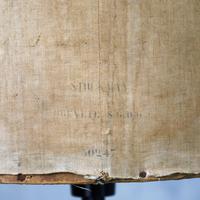
Historic marking stamped on the torso 30247 Breveté S.G.D.G
Adjustable hand turned ebonised wooden tripod stand
Notable feature & innovative for its time
Can be raised and lowered using the cast-iron Turn key, embossed with ‘Stockman’
Adds to the mannequin's functionality and historical value
Shows some watermarks and signs wear and tear
Commensurate and expected of a mannequin of this age
Stands comfortably and securely
Patina reflects the passage of time adding character to the overall aesthetic
H: 160cm (63") W: 40cm (15.7") D: 35cm (13.8")
UK Mainland delivery is included in our price (excluding Trade Purchases)
These fabulous treasures not only serves as a testament to the artistry of the era but also stands as a distinctive décor items, blending history and style seamlessly. Whatever the ultimate purpose intended these are rare and historic decorative pieces. This Original French Antique Stockman of Paris Mannequin (circa 1900) and historic Antique Dress Frock Coat (pre 1930) are sure to bring your project to life. Don't miss the opportunity to own a piece of fashion history and add some flair and a certain French je ne sais quoi to your home décor.
Embrace the allure of the past and capture the essence of early 20th-century France with this delightfully weathered, yet elegant, Original French Antique Stockman of Paris Mannequin from circa 1900. These mannequins, or dress forms were used by tailors and mercantile retailers and the forerunners of the couture houses of Paris such as Christian Dior.
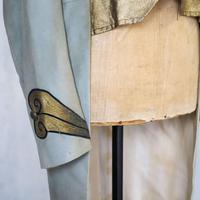
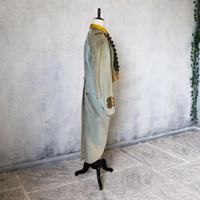
Crafted with precision and the utmost care and attention to detail this unique piece showcases an unbleached calico cotton covered torso silhouette with ebonised hand turned neck finial, with the manufacturer's mark on the bottom of the front of the torso 30247 Breveté S.G.D.G. raised on a charming and adjustable traditional Ebonised hand turned stand with a weathered tripod base. The turn key for height adjustment is a notable feature, as it allows the mannequin to be raised and lowered using a cast-iron handle. This feature was quite innovative for its time and adds to the mannequin's functionality and historical value.
The patina of the whole item reflects the passage of time adding character to the overall aesthetic.
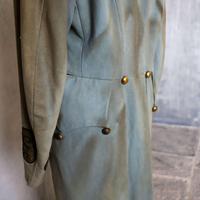
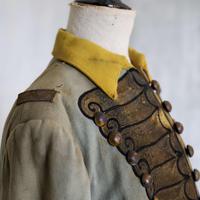
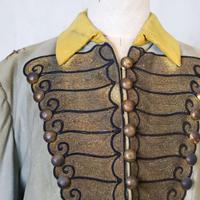
As if this sublime mannequin were not enough to swoon over it is offered with an exquisite Antique Theatrical Dress Frock Coat by B.J. Simmons & Co.3 This wonderfully ornate and beautifully embellished Antique Theatrical Dress Frock Coat was created by B.J. Simmons & Co. It has a magnificent history and is now showing the signs of its considerable and historic use and wear in which is totally in keeping for its age and intended purpose.
B.J. Simmons & Co.,3 a prestigious theatrical costumier, was located at 7 & 8 King Street, Covent Garden. Renowned for their stunningly detailed and high-quality costumes, they were the preferred choice for many theatrical productions and fancy dress events. Established in 1857, B.J. Simmons & Co. played an essential role in the theatre history of the late 19th and early 20th centuries. The company was celebrated for its sophisticated designs and historically accurate costumes, supplying over 1,200 stage and film productions before ceasing operations in 1964. Their legacy endures through the extensive collection of costume designs preserved in archives such as the University of Bristol and the Harry Ransom Centre.
The workshop at Covent Garden was a creative hub, producing meticulously crafted stage apparel that significantly enhanced the visual appeal and authenticity of theatrical performances. B.J. Simmons & Co. maintained a reputation for excellence and reliability, leaving a lasting legacy in the theatre and film industries.
B.J. Simmons & Co. distinguished themselves in the world of costume design for several reasons:
Historical Accuracy: Their costumes were highly sought after for historical productions due to their correctness of period.
Sophisticated Design: Renowned for their sophisticated designs and high-quality materials, setting a high industry standard.
Adaptability: Despite the challenges of two world wars, an economic depression, and shifts in entertainment forms, they continued to produce costumes for both stage and film.
Prominent Clients: Frequently commissioned by prominent theatre managers and actors, such as Herbert Beerbohm Tree, for grand productions.
Their extensive work set a high standard for costume design, making them a significant part of theatre history. The company provided costumes for numerous notable productions, both on stage and in film, including:
Shakespearean Productions: Frequently commissioned by Herbert Beerbohm Tree for his grand Shakespearean productions, known for their historical accuracy and elaborate designs.
The Balkan Princess: This British musical, which opened at the Prince of Wales Theatre in 1910, featured spectacular costumes by B.J. Simmons & Co.
London Film Productions: The main costume producers for many of their films, enhancing their visual appeal.
J. Arthur Rank Films: Supplied costumes for films produced by J. Arthur Rank, a major figure in British cinema.
The origin of the word Mannequin
Historically Fashion shops in Paris ordered dolls made from reeds from Flemish merchants who traversed the rivers Schelde and Oise which provided easy routes from Flanders to Paris. The Flemish merchants wrote ‘manneke(n)’ on their invoices which comes from the Flemish word manneken, commonly interpreted as ‘figurine,’ but its literal translation is ‘little man’ referring to late Middle Ages practice in Flanders whereby public display of even women's clothes was performed by male pages (boys).
The Parisians pronounced this as 'mannequen', hence shifted to 'mannequin' and refers to a model or dress form representing the human body. A mannequin is thus linguistically masculine, not feminine.
When evaluating an Antique Stockman Mannequin here are some key details to consider:
Manufacturer's Markings: Look for the Stockman Paris markings on the mannequin itself, often found on the bottom of the torso or on the metal stand bracket.
Condition: Check for any signs of wear and tear, such as watermarks, paint chips, or other blemishes. Wear is to expected given the considerable age of the mannequin and materials used.
Adjustability: Ensure the mannequin can be raised and lowered using the cast-iron handle. The stand should be fully adjustable and in good working condition. Look for the signature ‘Stockman’ embossing on the turn key
Material and Construction : Verify that the mannequin is made from high-quality original materials,
Collectible Item: Due to their historical significance and unique design, Stockman mannequins are highly sought after by collectors and antique enthusiasts. Finding one in really good condition is something of a rarity and will no doubt come with a significant price ticket.
Original French Antique Stockman of Paris Mannequin2
Stockman mannequins were meticulously hand crafted and have a rich history that dates back to the 19th century - 1867 in fact - and have played a significant role in the fashion industry, helping to standardise sizes and shapes and making fashion more accessible.
The origins of this form of Mannequin or dress form go back to Alexis Lavigne, a French tailor and inventor who established the first fashion school in the world in France in 1841. In 1847 he had invented the soft metric tape measure, and developed tailor's dummies from papier mâché. He exhibited his first fashion Bust Mannequin in the International Exhibition.
He opened a mannequin house in France in the 1850's and he later collaborated with Frédéric Stockman who was a young sculptor and disciple of Lavigne to develop mannequins with heads, arms and legs from wax.
Early Growth: Stockman decided to open his own company, a very small one at first, with the idea of providing dressmakers with forms in different standardised sizes.
The Stockman’s dressmaker’s form was created in 1867 by Frédéric Stockman using papier mâché; this recycled paper was applied on a mould in the shape of a mannequin. After cutting off the mould, the bust was stapled back together and sanded to smooth out any rough edges. The mannequin was then padded and covered with fabric, typically calico cotton, linen or cotton canvas and it was then imprinted with the Stockman logo and marked with size and shape references. This process ensured that each mannequin was unique and tailored to the needs of seamstresses, workshops of couture. The mannequins or dress forms were used to display clothing in a way that highlighted the garment's best features, contributing to the evolution of fashion presentation.
The company grew in small stages and settled in 150 rue Legendre in the 17th arrondissement of Paris. By 1900 Stockman was selling almost 30,000 busts a year.
Partnership with Siegel: Stockman then partnered with Mr Siegel, whose specialty was mannequins and metal accessories hangers. The partnership led to the formation of Siegel & Stockman, which became really famous during the Art Deco era. The 20’s and the 30’s had been prosperous years for the company and they provided the majority of the stores of Paris.
Association with Couture Houses: Stockman mannequins were used by many famous dawning couture houses, including Christian Dior, who used them for the "New Look" collection in 1947.
Modern Era: Siegel & Stockman continues to be a leading name in the industry, supplying mannequins to fashion designers and stores worldwide. The showroom is at 163 Rue du Faubourg Saint-Honoré in the 8th arrondissement of Paris, which is cited as being one of the most prestigious, luxurious and fashionable streets in the world thanks to the presence of major global fashion houses
Explore the Legacy of Fred Stockman Mannequins
Siegel & Stockman
History | Stockman Paris
Purchase with Confidence
Mainland UK Delivery Included: Enjoy the convenience of complimentary Mainland UK delivery (excluding Trade Purchases), ensuring your cherished pieces arrive safely at your door. Delivery is usually 2-5 working days from receipt of cleared funds in our bank account.
Transparent Condition Details: For a complete understanding of each item's condition, please examine all provided photographs. These images form a crucial part of our detailed condition report, offering clear insights into the meticulous craftsmanship and quality of this exquisite item.
Trusted Heritage: We are an established and successful business with many happy clients from both trade and private sectors. You are welcome to visit our beautiful showroom in West Sussex to experience our exquisite collection firsthand.
Please request a quotation for EXPORT/WORLDWIDE SHIPPING QUOTATIONS from any/all of the following including a link relating to the item in question:
Alan Smith Europe: info@alansmitheurope.com
Charlie Godwin: guildford@packsend.co.uk
Neil Curl Transport: neil@neilcurltransport.co.uk
Simon Hall Limited: exportdesk@simonhalllimited.com
measurements
Height:
160 cm
Width:
40 cm
Depth:
35 cm
declaration
White’s Antiques has clarified that the Stockman of Paris Mannequin 30247 c 1900 & Costume Coat (LA544708) is genuinely of the period declared with the date/period of manufacture being Early 20th Century
additional info
Category:
Material:
-
Origin:
-
Date of Manufacture:
Early 20th Century
location
This Stockman of Paris Mannequin 30247 c 1900 & Costume Coat is located in United Kingdom
Share:
Ask a question
Please note,
This dealer does not accept instant online payment for this item.
To buy this item please email the dealer using the enquiry form below.
A selection of items from White’s Antiques
White’s Antiques has 404 items available.Pair of Antique French Gilt Church Candelabra with Floral Branches, c.1900
£ 340
€397$458
White’s Antiques