1,200 Dealer Directory listings
250+ Active Dealers
Secure Payments via Stripe
Free Delivery Options
Categories
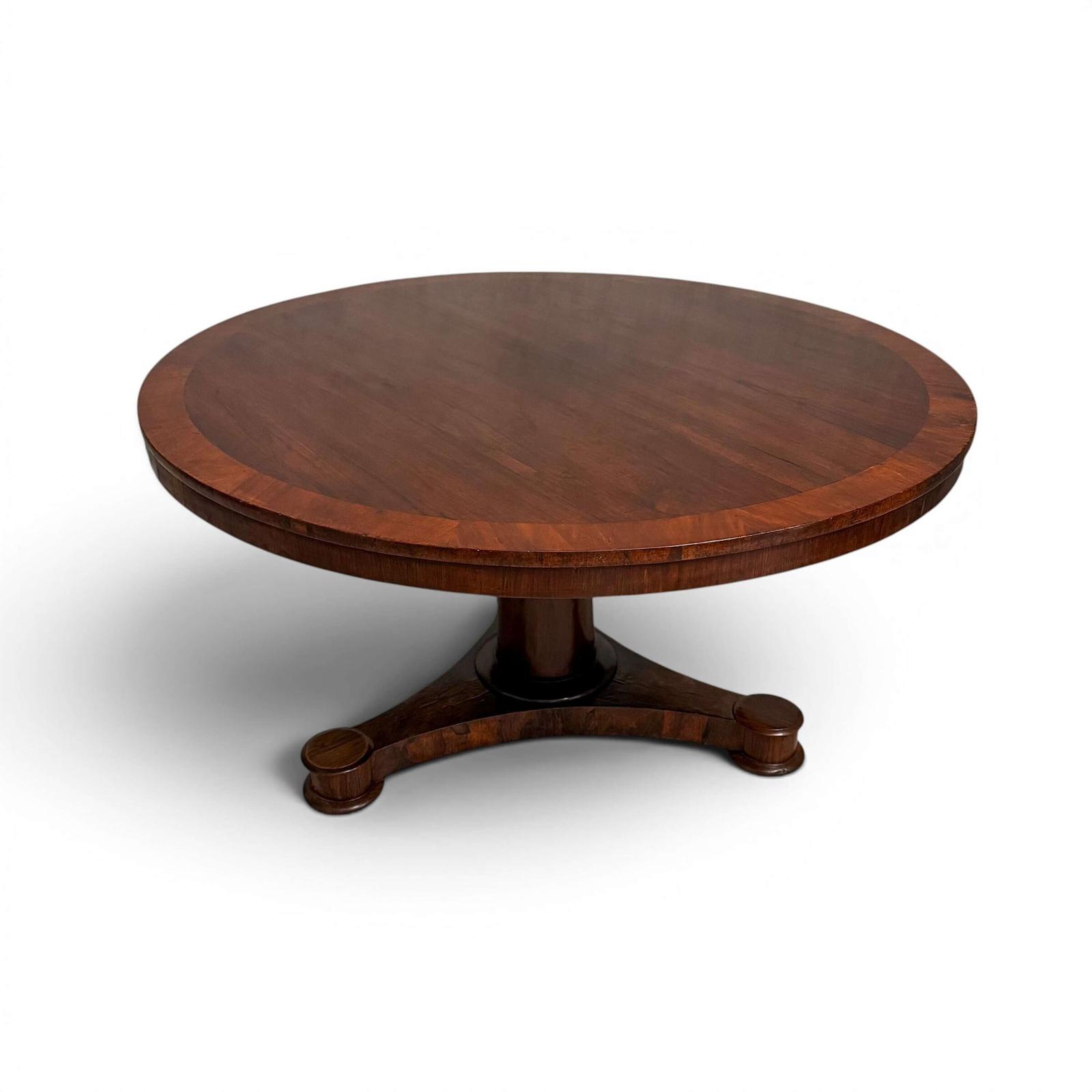
William IV Rosewood Tilt‑Top Dining / Centre Table with Yew Wood Crossbanding 1830–1837 (1 of 14)
White’s Antiques
Flag of United KingdomUK
Specialists in antique and decorative furniture, based in Sussex.
... See more

Address

Unit 10 The Vinery, Arundel Road

Poling, West Sussex

United Kingdom

BN18 9PY

Opening times

Monday-Friday 10-4 Saturday by appointment

Mobile

+447717 321455

William IV Rosewood Tilt‑Top Dining / Centre Table with Yew Wood Crossbanding 1830–1837

REF: EP057 / LA571210
£1,300
€1,501
$1,756
LoveAntiques Dealersince Feb 2021Approved item882 sales by dealer
Description
Elegant William IV rosewood tilt‑top table with yew crossbanding, superb patina and mahogany base - ideal as a dining or centre table. Why We Love This … A beautifully proportioned William IV table with all the hallmarks of early 19th‑century craftsmanship - rich rosewood grain, elegant yew crossbanding, and a wonderfully practical tilt‑top mechanism. Its scale makes it equally suited to dining, kitchen, or centre‑hall use, bringing warmth and refinement to any interior. At a Glance – Appeal, Desirability & Collectibility • Date: William IV era c.1830–1837 • Origin: England • Style: William IV • Materials: Rosewood top with yew wood crossbanding; mahogany tri‑base with sabre feet Condition: Condition is excellent for its age, with some minor wear and age related marks beneath the polish here and there, all adding to the character Notable Details: • Beautiful rosewood figuring with warm, even patina • Yew wood crossbanded edge to the circular top • Original brass release latch • Tilt‑top mechanism for space‑saving versatility • Mahogany base with sabre feet and hidden castors Decorative Appeal: • A refined, sculptural table with strong Regency‑to‑William IV lines and exceptional timber quality Versatility: • Perfect as a dining table, kitchen table, or as a statement centre table in a generous hallway Collectibility: Early 19th Century rosewood tables with original mechanisms and crossbanding remain highly sought after • Delivery is not included - please use the Delivery Quote tab prior to purchase Heritage, History & Craftsmanship: This elegant William IV tilt‑top table was crafted in England during the 1830s–40s, a period celebrated for its transition from Regency refinement to the more robust, richly toned designs of the early Victorian era. The circular rosewood top displays striking grain patterns and is framed with a yew crossbanded edge - a detail that speaks to the quality of the workshop that produced it. The tilt‑top mechanism, operated by an original solid brass latch, allowed households to reclaim space when the table was not in use. The mahogany tri‑base with sabre feet and concealed castors provides both stability and graceful movement. Recently re‑polished, the table retains its historic character while offering excellent usability today. Social History: Tilt‑top tables were a hallmark of 18th‑ and 19th‑century domestic life, designed to be both functional and elegant. In larger homes, they were often used as centre tables in entrance halls, displaying decorative objects or floral arrangements. In smaller homes, the tilt mechanism allowed the table to be stored neatly against a wall when not in use - a clever solution for multifunctional living spaces. Condition Report: Excellent for its age. The table has been re‑polished, with minor age‑related marks beneath the finish that are consistent with nearly two centuries of use. Structurally sound, with a smooth tilt mechanism and stable base. Provenance: An English William IV rosewood tilt‑top dining/centre table, c.1830–40, retaining its original brass release latch and period construction. Terminology by Style: The William IV period (1830–1837) bridges the elegance of the Regency era and the early Victorian taste for richer, more substantial forms. Furniture from this short reign is admired for its refined proportions, high‑quality timbers, and restrained ornamentation - a confident but unfussy style that feels timeless in modern interiors. Regency Influence: Although made slightly later, this table carries the hallmarks of Regency design: clean lines, classical balance, and an emphasis on beautiful timber rather than heavy carving. The Regency aesthetic prized symmetry, poise, and architectural clarity - all of which are evident in the table’s circular top and graceful pedestal base. Tilt‑Top Mechanism: A practical innovation of the 18th and 19th centuries, the tilt‑top mechanism allowed a table to be folded upright when not in use. This made it easy to reclaim floor space in multifunctional rooms or to store the table neatly against a wall. The mechanism on this example is operated by its original brass latch, a detail prized by collectors. Sabre Feet: Named for their resemblance to the curve of a cavalry sabre, these outward‑sweeping feet are a signature feature of late Regency and William IV furniture. They provide both elegance and stability, and often conceal small castors - as seen here - allowing the table to be moved with ease. Crossbanded Edge: Crossbanding is a decorative veneer technique in which a contrasting timber is laid at right angles to the main grain. The yew crossbanding on this table frames the rosewood beautifully, highlighting the circular form and demonstrating the cabinetmaker’s skill. It is a hallmark of quality in early 19th‑century furniture. Styling Suggestions: • Use as a centre table with a sculptural vase or seasonal arrangement • Pair with Regency or Victorian dining chairs for a period‑correct setting • Style in a hallway with a statement lamp and books • Ideal for kitchens seeking warmth and historic character Explore Every Facet: These images form an essential part of the condition report and are intended to provide complete transparency and confidence in your purchase • Top surface and grain • Crossbanded edge • Tilt mechanism and brass latch • Base, sabre feet, and castors • Underside and joinery Sustainable Style: Thank you for considering this this antique table - a choice that is both culturally and environmentally responsible … in every sense, the most sustainable item is the one that endures. Purchase with Confidence: White’s Antiques carefully selects every item for authenticity, character, craftsmanship, and decorative presence - ensuring that each piece carries both aesthetic and historic value. Every item is described and photographed with care, offering complete transparency and confidence in your purchase. We are an established and trusted resource for both trade and private collectors. You are warmly invited to visit our Showroom at The Vinery, Poling, West Sussex, to experience our curated collections firsthand, explore the stories behind each piece, and appreciate these timeless furnishings in person. Delivery & Collection Information • Delivery is not included - please use the Delivery Quote tab prior to purchase • Collection welcome from our Sussex showroom • Local delivery available • Nationwide couriers arranged on request
measurements
Height:
74 cm
Diameter:
142 cm
declaration
White’s Antiques has clarified that the William IV Rosewood Tilt‑Top Dining / Centre Table with Yew Wood Crossbanding 1830–1837 (LA571210) is genuinely of the period declared with the date/period of manufacture being circa 1830-1837
additional info
Material:
Origin:
Date of Manufacture:
circa 1830-1837
location
This William IV Rosewood Tilt‑Top Dining / Centre Table with Yew Wood Crossbanding 1830–1837 is located in United Kingdom
Share:

Ask a question

Please note,
This dealer does not accept instant online payment for this item.
To buy this item please email the dealer using the enquiry form below.

Please enter your phone number removing the first ‘0’.
UK international phone number pattern: +44 xxxx xxx xxx
Phone
A selection of items from White’s Antiques
White’s Antiques has 352 items available.See more items from White’s Antiques