
Specialist business of professional restorers and dealers of quality antique clocks and pocket watches.
Member of The British Watchmakers and Clockmakers Guild.
Heritage of Time
'%3e%3cpath fill='%23012169' d='M0 0v30h60V0z'/%3e%3cpath stroke='%23fff' stroke-width='6' d='m0 0 60 30m0-30L0 30'/%3e%3cpath stroke='%23C8102E' stroke-width='4' d='m0 0 60 30m0-30L0 30' clip-path='url(%23b)'/%3e%3cpath stroke='%23fff' stroke-width='10' d='M30 0v30M0 15h60'/%3e%3cpath stroke='%23C8102E' stroke-width='6' d='M30 0v30M0 15h60'/%3e%3c/g%3e%3c/svg%3e) Staffordshire, UK
Staffordshire, UK
Address
Unit 1, Ariane
Tamworth
Staffordshire
United Kingdom
B79 7XF
Opening times
Monday to Friday 10am-6pm Saturday & Sunday by Appointment
Mobile
+447947 495942
Wonderful 12” English Fusee Dial Clock with Scarce ‘passing Strike’ by James W. Benson 1880
REF: 423 / LA578800
Reserved
LoveAntiques Dealersince Jun 202635 sales by dealerAvailable for local pick-up
LoveAntiques Dealersince Jun 202635 sales by dealerAvailable for local pick-up
Description
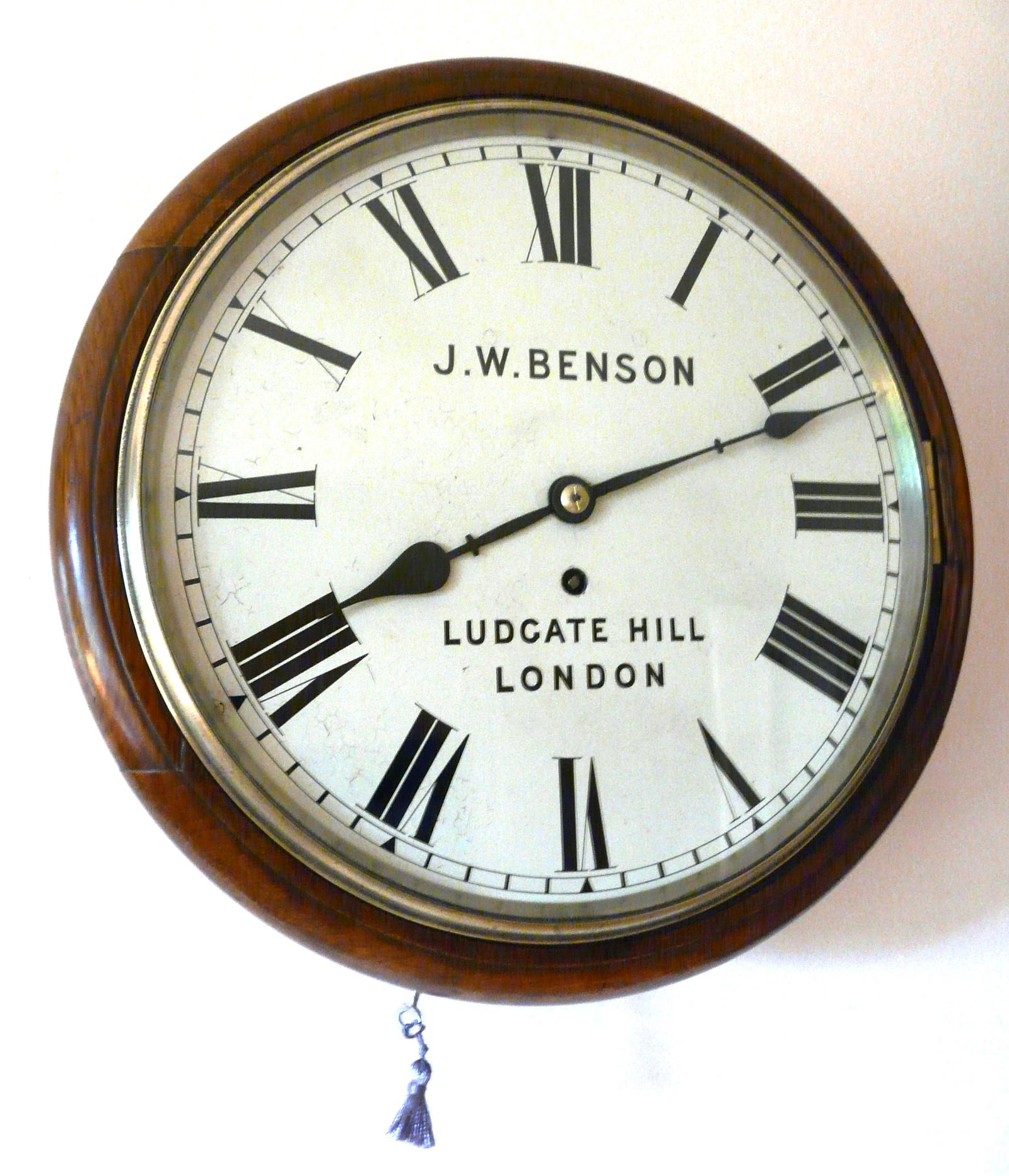
We present for consideration, this wonderful late Victorian fusee wall clock with 12” dial and rare ‘Passing Strike’ function, by world-renown firm, James William Benson of London.
Born in London, Middlesex, 1826, Benson’s famous trading name “J.W. Benson” came into being c1845. The firm went on to deal in jewellery, diamonds, silver, and gold goods along with their core business of making high quality clocks and watches. Benson started up in a partnership with his relative Samuel Suckley Benson and by 1840, they were selling watches under the trading name of “Ss & Jw Benson, Cornhill, London”. However, in Jan 1855 the partnership was dissolved and from 1855 to c1890 James traded under his own name of “J.W. Benson” from different operating premises at 62 & 64 Ludgate Hill, City of London (where this clock would have been made). By the 1890’s, the business had become a Limited Company.
Bensons held Royal Warrants during the 2nd half of the 19th century, starting in 1876 for Queen Victoria and the Prince of Wales, the King of Siam, and the King of Denmark. About this time Benson also had premises at the Royal Exchange and Bond Street, but it seems that neither of these addresses appeared on the dials of either their clocks or watches. During 1889, James Benson went on a company buying spree, acquiring brands such as; “Hunt & Roskell of London and Manchester” and “Sir John Bennett of Cheapside”. In 1892, the steam-powered factory in Bell Sauvage Yard, Ludgate Hill was opened, where Benson transferred his watch finishing operations too.
**NB: This factory continued to operate until 1941, when it was destroyed by a WWII bombing raid, resulting in the loss of 12,000 watches. Once the war was over, Bensons never again produced their own watches, preferring instead to assemble them from stock purchased from third-party manufacturers and putting their J.W. Benson name on the dials. Benson clocks however, were always made both the firm from their 62 & 64 Ludgate Hill works.**
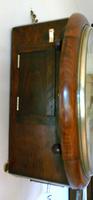
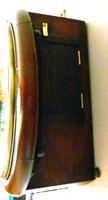
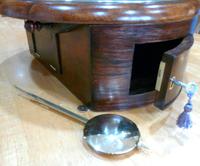
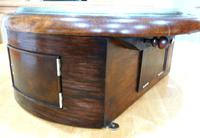
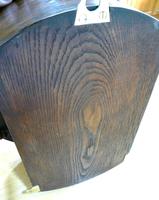
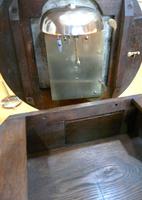
This clocks solid Oak turned roundhead face, sits over its boxed cabinet. The clock has two original hinged inspection doors, one on each side of the box and a further operable lockable regulator door located at the bottom of the box. The clock retains its original metal dial and artwork, with black painted Roman numerals and Benson’s details, finished with its original pair of blued Lozenge hands, secured with a pinned collet. The clocks dial is then protected by a thick glaze mounted in a superior quality solid brass bezel, incorporating a canted silvered brass fillet to the interior.
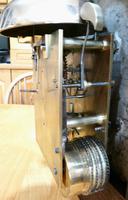
The clock benefits from a quality 8-day single fusee chain driven movement with ‘passing strike’ function. (Uniquely with Benson passing strike clocks, there are two strikes per hour; one strike at the top of each hour and one strike on the opposite half hour, when the brass hammer hits the top mounted 122mm diameter bronze bell). The movement sits between its rectangular plates and turned pillars and comes with its brass pendulum rod and bob and a fusee brass winding key.
This is an exemplary and superbly executed period dial clock of the highest order, from one London’s most notable and celebrated watch and clockmakers of the day. Sold with further research.
Payment - We Accept:
- Debit / Credit Cards.
- BACS Transfer. (Our bank details are on our invoices).
- Cash. (If collecting or on delivery).
£1,350
declaration
Heritage of Time has clarified that the Wonderful 12” English Fusee Dial Clock with Scarce ‘passing Strike’ by James W. Benson 1880 (LA578800) is genuinely of the period declared with the date/period of manufacture being 1880
additional info
Period:
Material:
Origin:
Date of Manufacture:
1880
location
This Wonderful 12” English Fusee Dial Clock with Scarce ‘passing Strike’ by James W. Benson 1880 is located in Staffordshire, United Kingdom
Share:
Ask a question
Please note,
This dealer does not accept instant online payment for this item.
To buy this item please email the dealer using the enquiry form below.
A selection of items from Heritage of Time
Heritage of Time has 34 items available.Wonderful 12” English Fusee Dial Timepiece by George Searle & Sons. 1884
£ 950
€1,117$1,254
Heritage of Time
Scarce 12” Victorian English Fusee Dial Timepiece by Herbert William Cave
£ 950
€1,117$1,254
Heritage of Time