Get alerts of the antiques that interest you as soon as they are uploaded
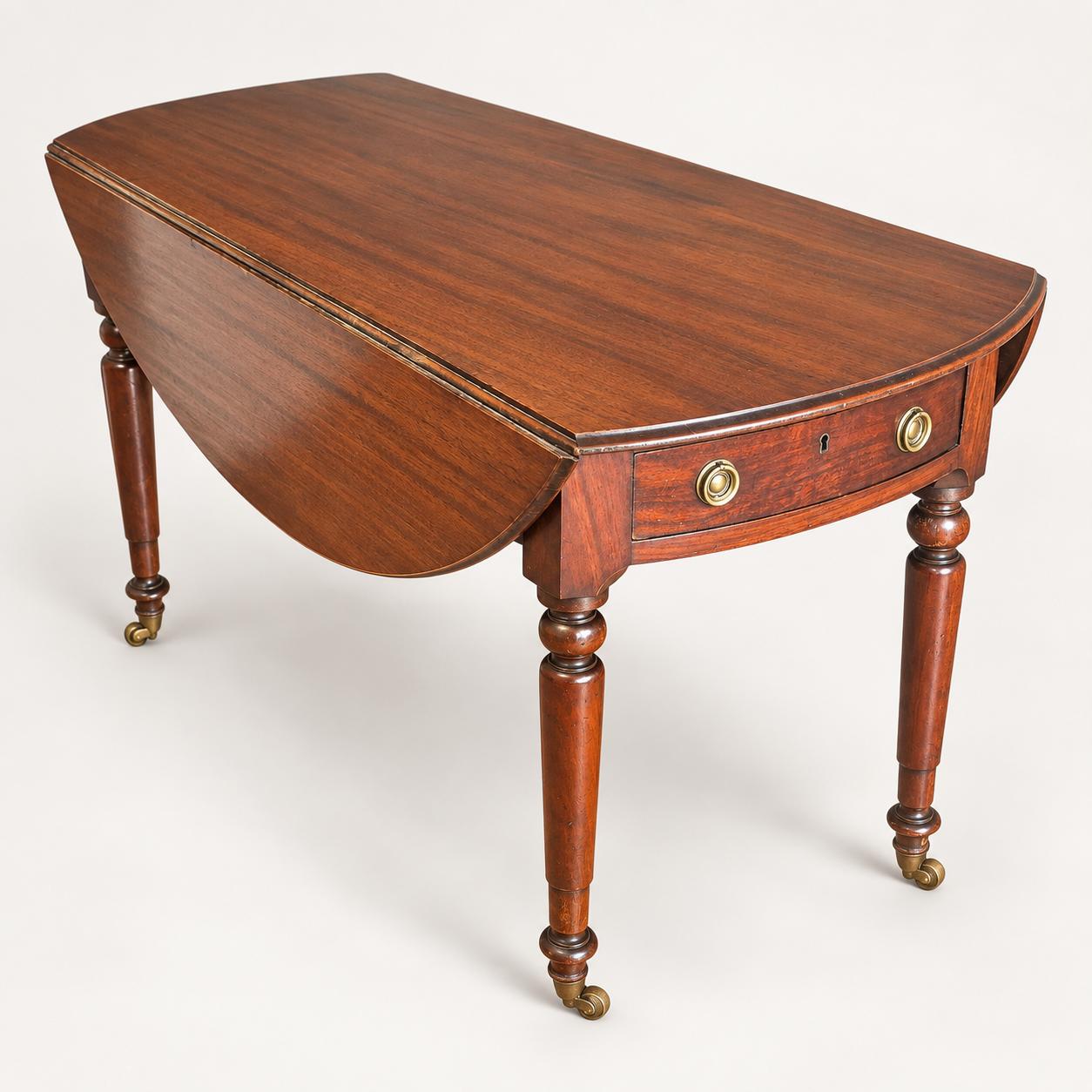
Georgian tables are widely regarded as some of the finest expressions of British cabinet making. Produced during the reigns of George I to George IV (1714–1830), they reflect a period of growing prosperity, global trade, and refinement in domestic interiors. The furniture of this era was designed with balance and proportion in mind, combining practicality with understated elegance.
Materials and Timber
Mahogany is the timber most closely associated with Georgian tables. Imported in large quantities from the West Indies and Central America, it offered exceptional strength, stability, and a fine, workable grain. This allowed cabinet makers to produce slender legs, elegant mouldings, and wide, durable tops without compromising structural integrity.
Earlier in the Georgian period, walnut was still in use, particularly in the first half of the 18th century. Oak occasionally appears as a secondary timber, used for drawer linings or internal framing. The quality of Georgian mahogany is often evident in its depth of colour and natural patina, developed over centuries rather than artificially applied.
Craftsmanship and Construction
Georgian tables were constructed entirely by hand. Traditional joinery methods such as mortise and tenon joints, wooden pegs, and hand-cut dovetails were standard practice. Extending dining tables, tilt-top tables, Pembroke tables, and tripod tables all demonstrate the ingenuity of the period’s cabinet makers.
Proportion was paramount. Influenced by classical architecture, Georgian design favoured symmetry and restraint. Legs might be gently tapered, turned, or carved with modest detail, rather than heavily ornamented. Surfaces were typically finished with shellac polish, allowing the natural character of the timber to shine through.
Prominent Makers and Designers
The Georgian era produced some of Britain’s most influential furniture designers. Thomas Chippendale published The Gentleman and Cabinet-Maker’s Director in 1754, shaping taste across Britain and beyond. His work ranged from refined simplicity to elaborate carving, though many pieces attributed to him were produced by skilled workshops following his published designs.
Thomas Sheraton and George Hepplewhite also played significant roles, particularly in the later Georgian period. Sheraton’s designs are known for their elegance and refined lines, while Hepplewhite favoured lighter proportions and delicate inlay. Although genuinely signed examples from these makers are rare, their influence can be clearly seen in the design language of the time.
Antique George III Mahogany Piecrust Tilt Top Dining Centre Table
£ 2,250
London City Antiques
Regency Brass & Satinwood-Inlaid Rosewood Games Table with Amazing Carved Pineapple Supports
£ 2,850
Georgian Antiques
Fine Regency Period Tilt Top Centre / Breakfast Table - Attributed to William Trotter of Edinburgh c.1815
£ 9,800
Wick Antiques Ltd
Antique Georgian Figured Mahogany Three Pedestal 10 to 12 Seater Dining Table
£ 11,785
London City Antiques
Large Antique Pembroke Table, English, Drop Leaf, Dining Table, 4 Seat - Regency
£ 2,950
London Fine Ltd
Fine Pair of Matched George IV Period Rosewood Tray Top Work Tables by Gillows c.1825
£ 9,800
Wick Antiques Ltd
Antique Fold Over Bridge Table, English, Walnut, Game, Card - Georgian c.1780
£ 3,950
London Fine Ltd
Excellent Quality Brass & Boxwood Inlaid Regency Neat-sized Sofa Table / Lamp Stand
£ 1,550
Georgian Antiques
Georgian Cuban Mahogany Tilt-top Occasional Table
£ 1,350
Marlborough Antiques & Interiors
Enduring Appeal
Georgian tables remain highly sought after because they combine structural integrity with enduring style. The use of quality mahogany, traditional joinery, and carefully balanced proportions ensures that these tables continue to function as well as they did two centuries ago. When well preserved, a Georgian table offers not only practical use, but a tangible connection to one of the most accomplished periods in British furniture making.
Get alerts of the antiques that interest you as soon as they are uploaded