
Wick Antiques was established by Charles Wallrock in the early 1980s. Having grown up in the Antiques world Charles developed an extensive wealth of knowledge. Starting out as a ‘man with a van’ he quickly gained a good reputation and embarked on a longstanding relationship with Harrods. He was later joined by his wife, Caroline Wallrock. Caroline having completed a Persian degree, went on to study at Christie’s fine art and then joined Sotheby’s specializing in Islamic and Japanese works of art, as well as taking the occasional auction. Together they make a formidable team with extensive knowledge and buy and sell some of the best items on the market.
Wick Antiques Ltd
'%3e%3cpath fill='%23012169' d='M0 0v30h60V0z'/%3e%3cpath stroke='%23fff' stroke-width='6' d='m0 0 60 30m0-30L0 30'/%3e%3cpath stroke='%23C8102E' stroke-width='4' d='m0 0 60 30m0-30L0 30' clip-path='url(%23b)'/%3e%3cpath stroke='%23fff' stroke-width='10' d='M30 0v30M0 15h60'/%3e%3cpath stroke='%23C8102E' stroke-width='6' d='M30 0v30M0 15h60'/%3e%3c/g%3e%3c/svg%3e) Hampshire, UK

Address
Unit 2 Riverside Business Park
Lymington
Hampshire
United Kingdom
SO41 9BB
Opening times
By Appointment Only
Mobile
+447768 877069
A Fine 19th Century Table Cabinet or “toilet Chest” in Native New Zealand Specimen Timbers by William Norrie of Auckland, c.1880
REF: LA592259
£3,250
€3,896
$4,350
LoveAntiques Dealersince Jan 2019589 sales by dealer
LoveAntiques Dealersince Jan 2019589 sales by dealer
Description
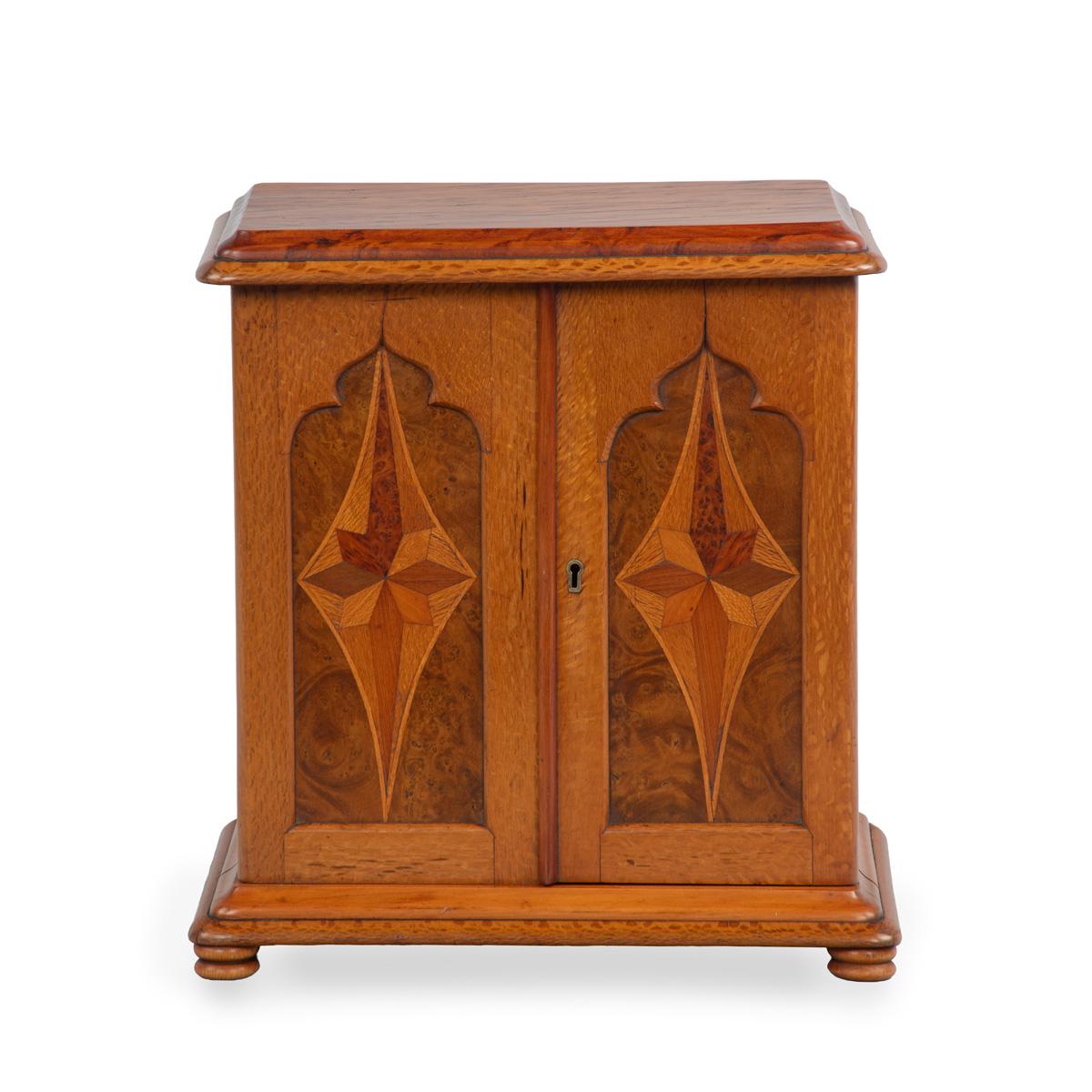
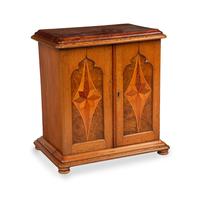
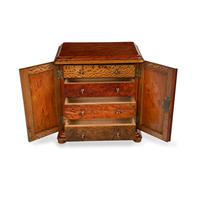
A fine 19th Century table cabinet or “Toilet Chest” in native New Zealand specimen timbers by William Norrie of Auckland, c.1880
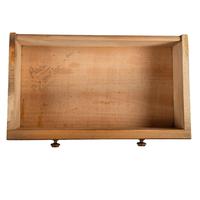
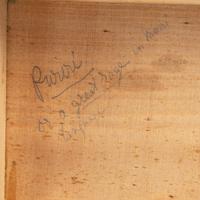
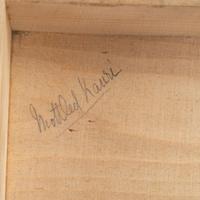
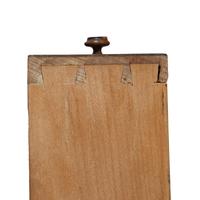
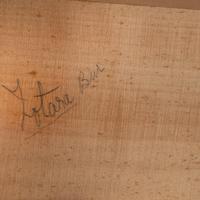
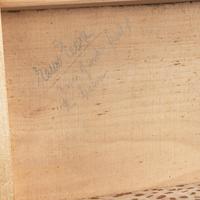
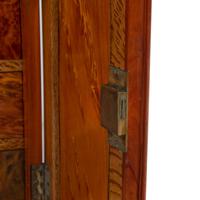
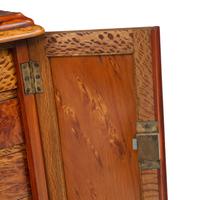
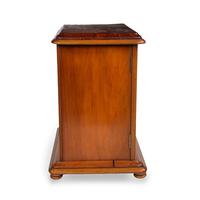
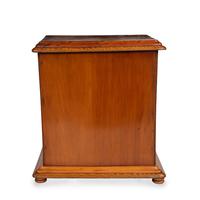
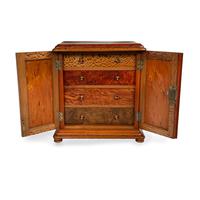
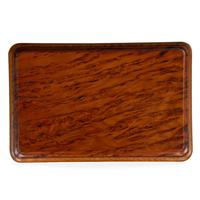
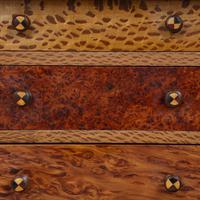
The cabinet of rectangular form with an overhanging double moulded top and a conforming base, standing upon double stacked flattened bun feet. Every section of the piece is made from timbers native to New Zealand, including beautifully figured Kauri for the top, a timber which is renowned for its figuration which resembles fern leaves. Inside the cabinet are four drawers, each with an exotic wood front, and each of the drawers has the name of the timber used inscribed in pencil on the undersides. The timbers used are, in the words of the maker:
‘Puriri, or a great Sage in Māori language’
‘Totara Bur’
‘Mottled Kauri’
‘Rewa Rewa (Rewarewa) name of wood in front of this drawer’
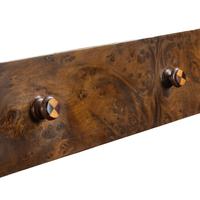
And even the drawer pulls are inlaid, creating a striking contrast with the figured timbers used on the drawer fronts.
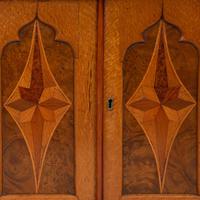
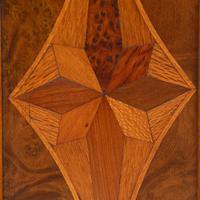
The doors of the cabinet feature fielded panels of what would probably have been termed Moorish design at the time, the shape of the panels being reminiscent of the Sultan’s head designs seen on certain fine prayer rugs from Turkey. Inlaid in to the centre of the doors are waisted star designs with inlaid stars in contrasting native timbers within a panel of stringing.
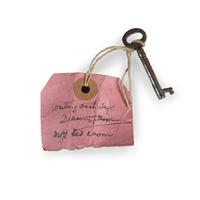
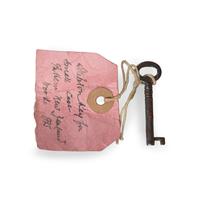
The cabinet retains the original key, and connected to this is a label recording the name of a previous owner.
Although unsigned, we are absolutely sure that the present piece originated from the Shortland Street, Auckland, workshops of William Norrie. A nearly identical cabinet sold at Bonham’s in 2009, that piece sharing not only the same distinctive inlay and use of timbers but also handwriting in the same hand and maker’s labels for the Norrie workshop. Intriguingly these labels also include the names of many of the firm’s most prestigious clients, namely:
‘Sir William Jervois, K. C. M. G., the Earl of Onslow, K. C. M. G., M. La Cascades, The Earl of Burford, The Countess of Jersey, General Sir Mark Walker, V. C., K. C. B., Admirals Fairfax, Lord Charles Scott and Bowden-Smith, and nearly all nobility, British and Foreign Officers and Gentry who have visited New Zealand’.
Our research in the New Zealand newspaper archives have revealed further evidence about Norrie and the extent of his business. He is believed to have emigrated to New Zealand from Scotland and for at least some of his career he worked in conjunction with his brother Robert who continued to trade after William had retired. The Norries advertised extensively in the newspapers. A typical advert is transcribed below from the Auckland Star, 9th of December 1880:
‘FOR A CHRISTMAS GIFT
The most suitable is Rich Mottled Kauri chest of drawers; Toilet chests of four drawers only 45s for cash. They become more beautiful with keeping, will always work easy, and are always valuable articles. William Norrie, cabinetmaker, top of Shortland-street’.
It is highly likely that the present piece is one of these so-called “toilet chests”, designed by Norrie for a lady’s dressing table.
Norrie exhibited widely, both in new Zealand and at the Melbourne Exhibition (1880-81) and the Colonial and Indian Exhibition in London (1886). The New Zealand Herald, 17th of August 1885, reviewed the exhibits at the Wellington Exhibition and noted:
‘One of the most beautiful exhibits of the cabinetmaker’s art in the whole Exhibition is a handsome Princess of Wales modern wardrobe manufactured by Mr. Norrie, of Shortland-street. Each wing contains a plate glass panel, lined with crimson silk. The woodwork of the panels is of picked mottled kauri (a freak of nature) resembling fern leaves. The centre compartment is made of puriri, totara, curly kauri, rewa-rewa, akeake, pohutakawa, and kohekohe, and the ladies’ drawer is decorated with a hand-painted panel……the general effect is admirable’.
The New Zealand Herald, 22nd of July 1886, contains a report of Norrie’s work at the Colonial and Indian Exhibition in London, noting:
‘Mr William Norrie, of Auckland, exhibits several articles of inlaid woods, which, while they show the extraordinary variety and beauty of the New Zealand timbers to singular advantage, demonstrate beyond question their remarkable suitability for this special branch of industry. One of the most elaborate and exquisite pieces of furniture showing the excellence of Mr. Norrie’s handicraft is what is known as the Princess of Wales’ cabinet. It is composed of an almost unique collection of woods, and is fashioned after a tasteful semi-Gothic design. Several of the woods used are of the choicest description; the top part being inlaid with mottled fern-leaved kauri of the rarest kind. All of the elaborate recesses and drawers are designed in a manner in which the greatest judgement and taste have been exercised to produce the most harmonious and artistic effect’.
A dressing table by Norrie was purchased by the National Museum of New Zealand in 2012 and may be seen on their website here:
https://collections.tepapa.govt.nz/object/1178098?page=1&rtp=1&ros=1&asr=1&assoc=all&mb=c
One of the most charming references to Norrie comes in an article in the Auckland Star from the 6thof January 1925:
‘There are many old residents who remember the cabinetmaker’s shop in Shortland Street, where Mr. Norrie displayed some of the finest inlaid furniture, manufactured by his own hands, ever seen in this country. When Lord Glasgow was Governor of New Zealand, nearly 30 years ago, Lady Glasgow and the rest of the family were frequent visitors at Mr. Norrie’s shop, and to their special orders he executed some very choice designs of inlaid woodwork, which eventually found its way to the ancestral home of the Glasgows in Scotland. When Lady Fergusson was recently in Auckland she inquired regarding the old shop and wanted to know if it was still in existence, and if Mr. Norrie was still hale and hearty. She was delighted to know that he is now living in retirement at Remuera, and although getting on in years is a frequent visitor to the Queen Street shops, and is as erect as in the days when he held a captain’s commission in the Queen’s army during the last Waikato war, when settlers were called upon to defend their homes, and when Auckland itself was threatened by hostile natives. Lady Fergusson’s short stay in the city made it impossible for her to call upon Mr. Norrie, but it is her intention to interview him on her next visit to the North, and recall incidents when as a girl she visited his shop and admired his work’.
We have not been able to ascertain precisely when Norrie died but he is described as ‘the late William Norrie, formerly of Shortland Street’ in a family member’s obituary printed in the New Zealand Herald, 9th of March 1935. That means that he must have died between 1925 and 1935, his brother Robert also dying in this same period in 1932.
This cabinet of drawers is an outstanding piece of New Zealand furniture of the period, being both decorative and historically interesting and a fine testimonial to the skills of its maker and his successful business.
measurements
Height:
14.75 in
Width:
13.5 in
Depth:
9 in
declaration
Wick Antiques Ltd has clarified that the A Fine 19th Century Table Cabinet or “toilet Chest” in Native New Zealand Specimen Timbers by William Norrie of Auckland, c.1880 (LA592259) is genuinely of the period declared with the date/period of manufacture being Circa 1880
additional info
Period:
Material:
Origin:
Date of Manufacture:
Circa 1880
location
This A Fine 19th Century Table Cabinet or “toilet Chest” in Native New Zealand Specimen Timbers by William Norrie of Auckland, c.1880 is located in Hampshire, United Kingdom
Share:
Ask a question
Please note,
This dealer does not accept instant online payment for this item.
To buy this item please email the dealer using the enquiry form below.
A selection of items from Wick Antiques Ltd
Wick Antiques Ltd has 777 items available.Fine Mid 19th Century Anglo Indian Side Cabinet / Cupboard of Indian Blackwood with Lion Feet - Made in the Bombay Area c.1860
£ 4,850
€5,814$6,492
Wick Antiques Ltd
Fine & Important Late 19th Century Giltwood Side Table in Style of William Kent - English c.1880
£ 55,000
€65,935$73,617
Wick Antiques Ltd
Fine Early 19th Century Side Table in the William Kent Manner - English c.1830
£ 16,500
€19,781$22,085
Wick Antiques Ltd
A Fine Pair of Regency Mahogany Side Cabinets by Gillows, c.1815
£ 36,500
€43,757$48,855
Wick Antiques Ltd