
Specialist business of professional restorers and dealers of quality antique clocks and pocket watches.
Member of The British Watchmakers and Clockmakers Guild.

Heritage of Time
'%3e%3cpath fill='%23012169' d='M0 0v30h60V0z'/%3e%3cpath stroke='%23fff' stroke-width='6' d='m0 0 60 30m0-30L0 30'/%3e%3cpath stroke='%23C8102E' stroke-width='4' d='m0 0 60 30m0-30L0 30' clip-path='url(%23b)'/%3e%3cpath stroke='%23fff' stroke-width='10' d='M30 0v30M0 15h60'/%3e%3cpath stroke='%23C8102E' stroke-width='6' d='M30 0v30M0 15h60'/%3e%3c/g%3e%3c/svg%3e) Staffordshire, UK
Staffordshire, UK
Address
Unit 1, Ariane
Tamworth
Staffordshire
United Kingdom
B79 7XF
Opening times
Monday to Friday 10am-6pm Saturday & Sunday by Appointment
Mobile
+447947 495942
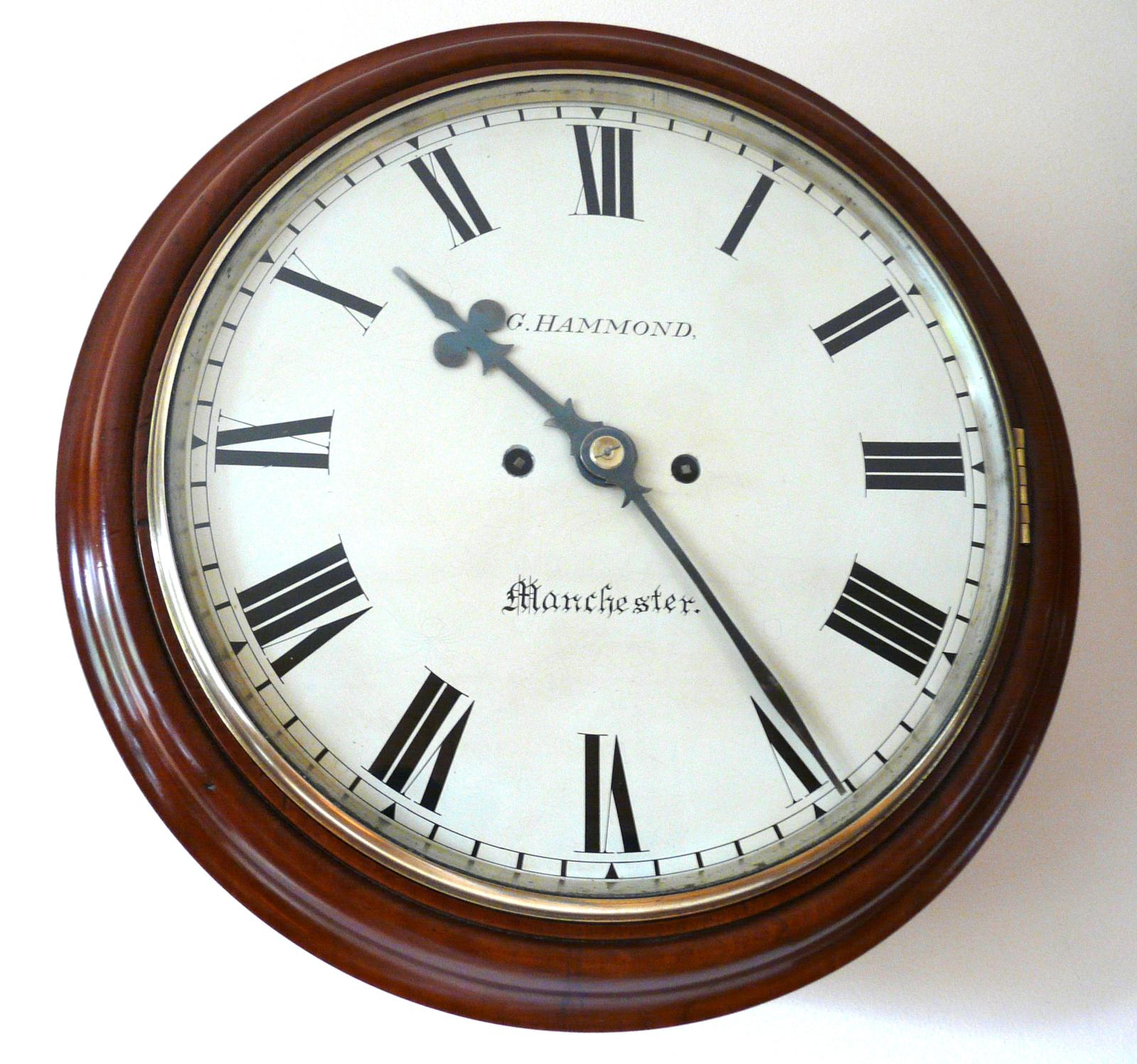
Exceptional and Rare 1868 English Twin Fusee Striking Dial Clock by George Hammond
REF: 416 / LA578779
Reserved
LoveAntiques Dealersince Jun 202635 sales by dealer
LoveAntiques Dealersince Jun 202635 sales by dealer
Description
A truly exceptional and exceedingly rare 8-day twin fusee striking dial clock, by master clockmaker George Hammond, who along with his brother Thomas and cousin John Hammond, were first generation members of what became a long and famous family dynasty of Manchester clock and watch makers.
George Hammond was born in Whitby, Yorkshire, in 1815 and served his apprenticeship in Manchester under renown clockmakers John and William Chadwick. Having served his time, he set up on his own as a clock and watch repairer, eventually growing his profile and reputation sufficiently enough to commence making his own clocks and watches under commission from c1840.
By c1851, Hammond was residing at Collins Street, Manchester with his family and was also working in partnership with family members Thomas (Sr), John and Thomas (Jr), operating from the junction of 47 Cross Street / Market Street in Manchester’s city centre. By 1855 Thomas (Sr) and John had relocated to another city centre operation at 16 Quay Street, Manchester, to concentrate on national / international turret clock design and production, leaving George to manage and grow the domestic clock and watch making business from their Cross Street / Market Street base.
By c1865, and still based at 47 Cross Street / Market Street, George was making complicated high-quality clocks, timepieces and watches under his own name (“G. Hammond”), such as this outstanding example. By 1871, Hammond was then living at Wilberforce Terrace, Hulme, a district of south Manchester and working with him in the business, was his son John (born 1847). As such, and by 1878, the business name had been changed to; “George Hammond & Son of Manchester” and this famous Manchester family brand name then continued successfully into the 20th Century! It is not known when George passed away, but what is certain, his legacy lived on long after his death, with future generations of Hammonds driving the family business forward.
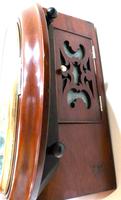
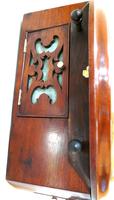
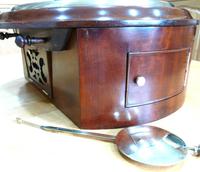
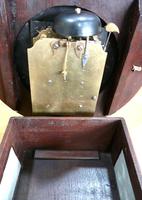
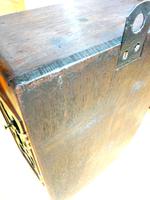
The clocks turned roundhead face is crafted from solid mahogany and the boxed cabinet from Oak with mahogany veneer. Hinged inspection doors are located on each side of the box, both exhibiting intricately hand-carved wooden sound frets backed with later replacement green baize, along with an additional ‘pull-down’ hinged regulator door located at the bottom of the box. The clocks metal dial has black painted Roman numerals with Hammond’s details, finished with its pair of original blued steel Mudge style hands secured by a pinned collet. The clocks dial is then protected by a thick glaze mounted in a brass bezel that incorporates a canted silvered brass fillet to the interior.
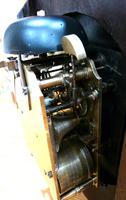
The clock benefits from a robust 8-day twin fusee driven movement that strikes the hours on its top mounted steel bell. The movement sits between 4mm thick shouldered plates with knopped pillars and comes with its brass pendulum rod and bob and a fusee brass winding key.
A highly prestigious and well executed twin fusee striking dial clock of outstanding quality, from one Manchester’s most famous and well-documented clockmaking families!
Payment - We Accept:
- Debit / Credit Cards.
- BACS Transfer. (Our bank details are on our invoices).
- Cash. (If collecting or on delivery).
£2,950
measurements
Depth:
17 cm
Diameter:
39 cm
declaration
Heritage of Time has clarified that the Exceptional and Rare 1868 English Twin Fusee Striking Dial Clock by George Hammond (LA578779) is genuinely of the period declared with the date/period of manufacture being 1868
additional info
Period:
Material:
Origin:
Date of Manufacture:
1868
location
This Exceptional and Rare 1868 English Twin Fusee Striking Dial Clock by George Hammond is located in Staffordshire, United Kingdom
Share:
Ask a question
Please note,
This dealer does not accept instant online payment for this item.
To buy this item please email the dealer using the enquiry form below.
A selection of items from Heritage of Time
Heritage of Time has 34 items available.Uniquely Rare Late Victorian 8” English Fusee Dial Timepiece by William Stone
£ 1,950
€2,293$2,574
Heritage of Time
Exceedingly Rare 8” Late Victorian English Fusee Dial Timepiece by Arthur Henry Leeson
£ 1,950
€2,293$2,574
Heritage of Time