Banjo Barometers
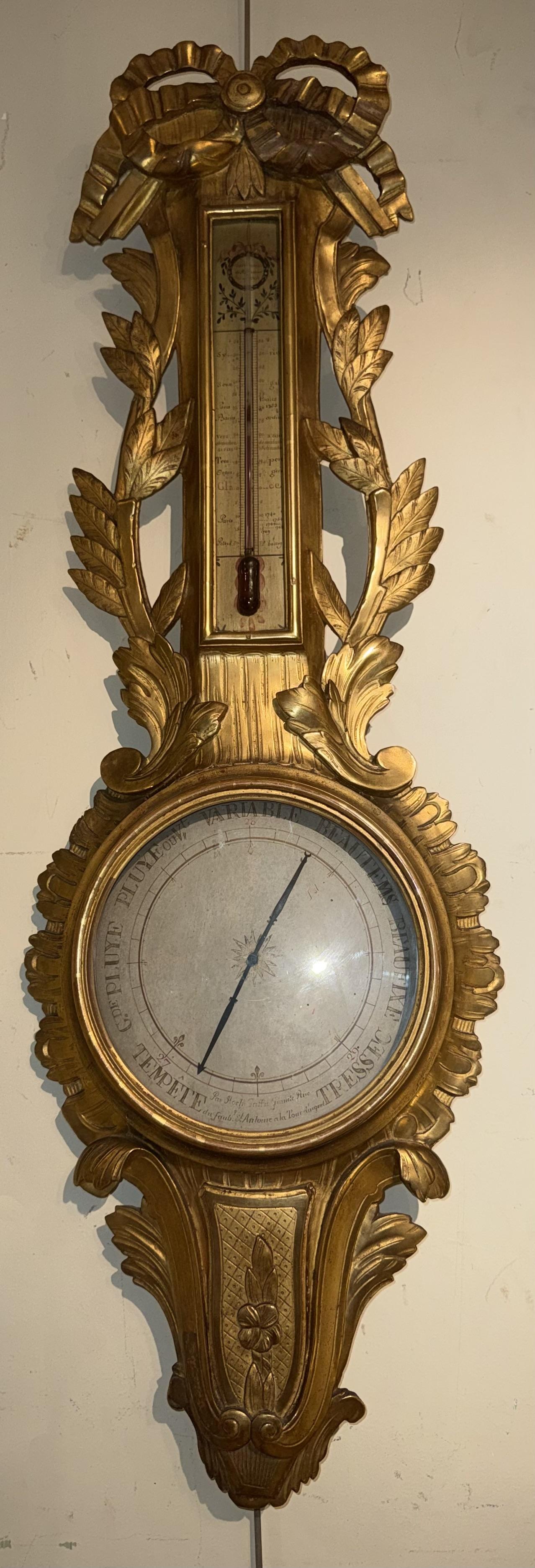
Banjo barometers are among the most recognisable and decorative forms of antique barometer, named for their distinctive outline, which resembles a banjo or violin. Developed in Britain during the late Georgian period, they combine practical weather measurement with refined cabinetmaking, making them as much a piece of furniture as a scientific instrument.
Most banjo barometers date from the late 18th and early 19th centuries, a period when domestic interest in science was growing and well-made instruments were increasingly displayed in the home. Early examples typically rely on mercury, housed within a glass tube concealed inside a shaped wooden case. By the Victorian period, the form remained popular, though decoration and proportions evolved to suit changing tastes.
The classic banjo barometer consists of a circular main dial with a long, narrow trunk below, often incorporating a thermometer. Cases were commonly made from mahogany, sometimes with boxwood stringing or subtle inlay, and finished to a high standard. Dials were usually engraved in brass or silvered metal, with traditional weather indicators and finely cut numerals.
One of the most influential figures associated with the development of the banjo barometer is Edward Nairne, a leading London scientific instrument maker of the late 18th century. Nairne is widely credited with refining the form into the elegant, balanced design that became the standard. His work, and that of contemporaries working in London, set a benchmark for accuracy and craftsmanship that later makers followed.
When assessing a banjo barometer, originality is crucial. Original dials, intact mercury tubes, and unaltered cases are all highly desirable. Signs of heavy restoration or replacement parts can affect both value and historical interest. Signed examples by recognised makers are particularly sought after.
Today, antique banjo barometers are appreciated for their sculptural presence and their place in the history of British scientific instruments. Well-preserved examples remain practical, decorative, and deeply rooted in the craftsmanship of their time.
Antique George III Quality Mahogany Shell Inlaid Banjo Barometer
£ 1,185
London City Antiques
Barometer George the III French Royal Exchange London Mahogany Cased Barometer
£ 649
Bentleigh Antiques Limited
Antique Edwardian Quality Mahogany Inlaid Aneroid Banjo Barometer
£ 885
London City Antiques
Outstanding Quality Antique 19th Century Black Forest Android Barometer
£ 2,250
Unique Antiques By Emma Jade
Quality Antique Victorian Carved Walnut Banjo Clock Barometer
£ 895
Unique Antiques By Emma Jade
Quality 18th Century Antique Georgian Mahogany Banjo Barometer
£ 1,385
London City Antiques
Fantastic Quality Antique Victorian Carved Oak Banjo Clock Barometer
£ 875
Unique Antiques By Emma Jade
‘Royal’ Barometer by John Russell, Watchmaker to the Prince Regent
£ 58,500
Wick Antiques Ltd
Antique Victorian Quality Mahogany Banjo Barometer by James H Kelly of Glasgow
£ 795
London City Antiques
19th Century Inlaid Mahogany Banjo Barometer by L Casatelli of Liverpool
£ 1,350
Martlesham Antiques
19th Century Antique Rosewood Inlaid Mother of Pearl Banjo Barometer
£ 1,285
London City Antiques