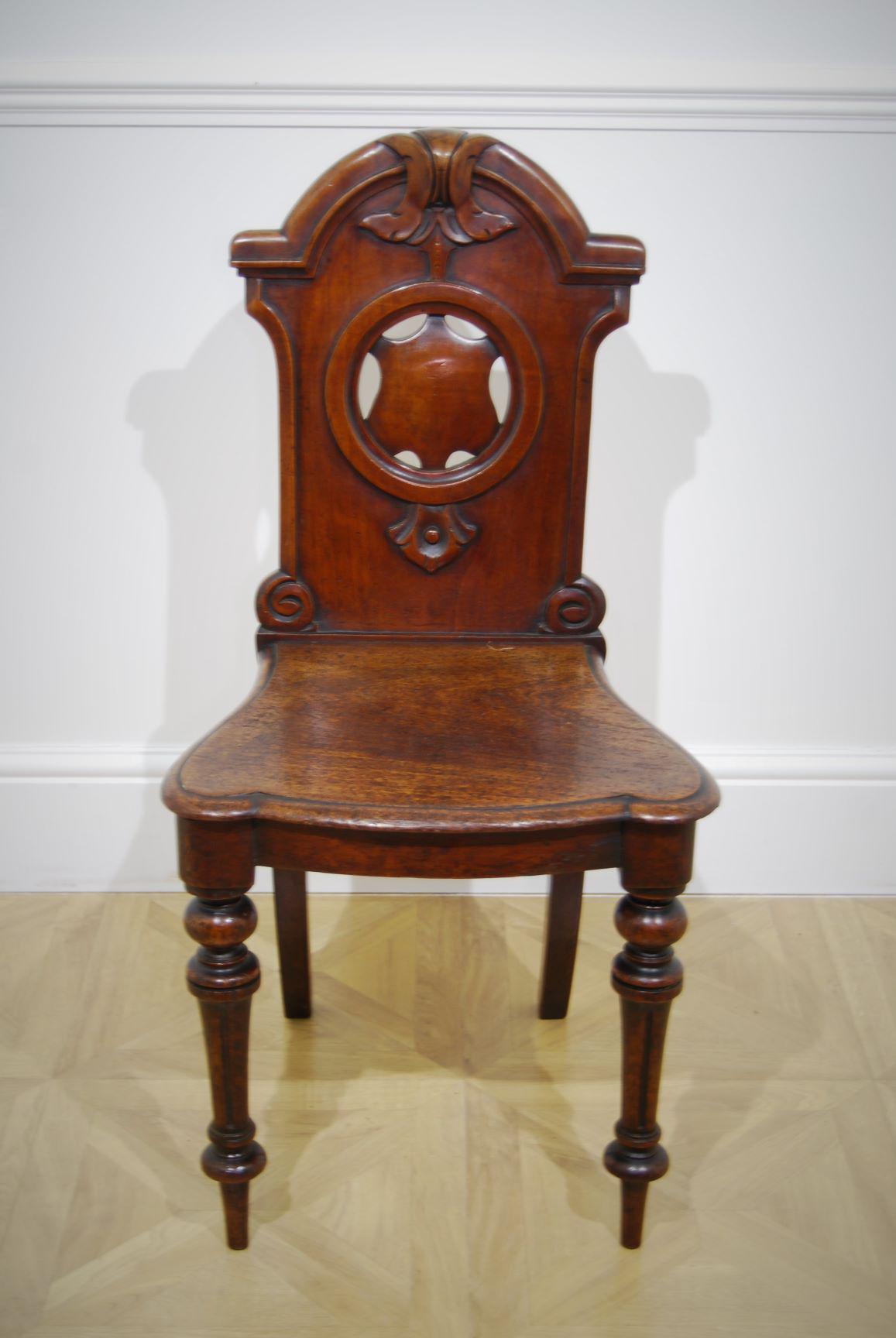
In any traditional British home, the hall was once more than a thoroughfare. It was a space of introduction – where callers were received, hats were doffed and muddy boots removed. Antique hall chairs were designed for precisely that setting: sturdy, often upright seats placed against the wall of an entrance hall, ready for practical use yet quietly expressive of the household’s taste.
The term generally refers to single chairs made for the hallway, but historically they sit within a broader tradition of hall furniture. Earlier country houses often favoured larger, high-backed settles along the wall; by the 18th and 19th centuries these gave way, in many properties, to individual hall chairs – easier to arrange in pairs or sets, and more adaptable to narrower town-house corridors.
Well-chosen antique hall chairs bring both presence and purpose to a space. They are decorative without being fussy, and when original they tell us much about regional craftsmanship and the evolution of domestic life in Britain.
Materials
Material matters greatly in antique chairs. Oak offers durability and a certain architectural weight; it ages to a deep, characterful tone. Mahogany, whether Cuban or later West Indian varieties, allows for sharper carving and a richer surface. Pine, seen in simpler country examples, has its own honest charm and was often painted or grained to imitate more expensive timbers. Walnut, though less common in hall seating, lends warmth and refinement.
Buying Considerations
Scale is paramount. Entrance halls in Georgian and Victorian terraces can be surprisingly narrow, so measure carefully. A pair of antique hall chairs should sit comfortably against the wall without obstructing the passage.
Check for structural integrity: firm joints, no excessive wobble, and no active woodworm. Old worm, long since treated and inactive, is common and not necessarily problematic, but it should be stable. Look beneath the seat for signs of later strengthening blocks or replaced rails, which may affect value.
Original surface – whether polish, paint or cresting – significantly enhances desirability. Over-stripping can leave a chair looking lifeless and diminish its historical integrity.
A Lasting Presence
Antique hall chairs are modest pieces in many respects, yet they carry considerable character. They speak of the threshold between public and private life in British homes and of the craftsmen who supplied that need across three centuries. Whether Georgian, Victorian or Edwardian, a well-chosen example offers both function and quiet authority – precisely as it was intended to do.
Fine Pair of 19th Century Regency-style Giltwood Upholstered Open Armchairs
£ 1,550
artsonline.org.uk
Decorative Victorian Carved Walnut & Tapestry Upholstered Chair c.1870
£ 285
Salisbury Antiques Centre
Antique Shield Back Hall Chair, Scottish, Walnut Reception Seat, Side - Victorian
£ 795
London Fine Ltd
Pair of Antique Morning Room Elbow Chairs, English, Reception Seat - William IV
£ 3,450
London Fine Ltd
Pair of Antique Hall Chairs, English, Reception Seat, Morning Room - William IV
£ 1,895
London Fine Ltd
Very Pretty French Leather Club Chair - Normandy Moustache Model c.1920
£ 1,285
The Club Chair Studio @ Matt Black Interiors
Victorian Side or Hall Chair Carved Back in Solid Oak with Green and Gold Fabric
£ 149
Bentleigh Antiques Limited
Set of Four 19th Century English Regency Mahogany Hall Chairs
£ 3,500
Lee Wright Antiques Ltd