
Specialists in antique and decorative furniture, based in Sussex.
White’s Antiques
'%3e%3cpath fill='%23012169' d='M0 0v30h60V0z'/%3e%3cpath stroke='%23fff' stroke-width='6' d='m0 0 60 30m0-30L0 30'/%3e%3cpath stroke='%23C8102E' stroke-width='4' d='m0 0 60 30m0-30L0 30' clip-path='url(%23b)'/%3e%3cpath stroke='%23fff' stroke-width='10' d='M30 0v30M0 15h60'/%3e%3cpath stroke='%23C8102E' stroke-width='6' d='M30 0v30M0 15h60'/%3e%3c/g%3e%3c/svg%3e) UK
UK
Address
Unit 10 The Vinery, Arundel Road
Poling, West Sussex
United Kingdom
BN18 9PY
Opening times
Monday-Friday 10-4 Saturday by appointment
Mobile
+447717 321455
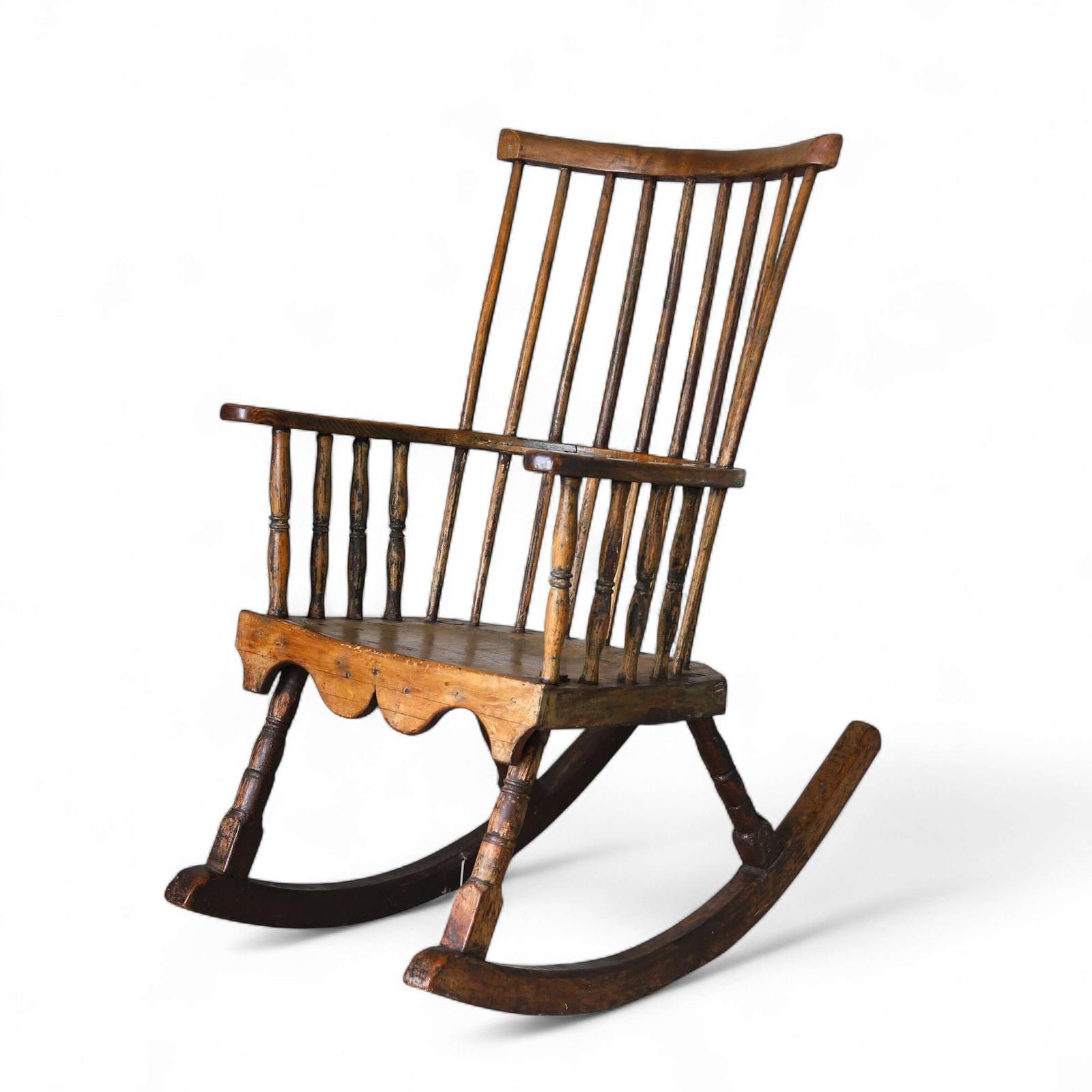
19th Century Primitive Vernacular English Comb-back Rocking Chair - Ash & Sycamore
REF: LA551656
£995
€1,158
$1,321
Secure Payments By
LoveAntiques Dealersince Feb 2021Approved item984 sales by dealerAvailable for local pick-up
LoveAntiques Dealersince Feb 2021Approved item984 sales by dealerAvailable for local pick-up
Description
A rare and wonderfully authentic early primitive vernacular 19th Century comb-back rocking chair in ash and sycamore from North Yorkshire, with traces of its original paint and the warmth and rustic charm of centuries-old craftsmanship
At a Glance - Appeal, Desirability & Collectability
• Date: 19th century (circa 1840)
• Origin: North Yorkshire, England
• Materials & Construction: Ash and sycamore, traditionally joined and hand-turned
• Design: Primitive comb-back rocking chair with cupid-bow shaped mouldings on the comb crest rail, turned spindle arm supports, and a thick one-piece sycamore seat
• Craftsmanship: Artisan-made for comfort, resilience, and daily use, with gentle curved rockers and strong yet elegant proportions
• Finish: Retains traces of its original painted surface, now beautifully mellowed with age and rich patina
• Delivery is not included - please use the Request Delivery Quote before completing your order
• Appeal & Collectability:
• Rare, distinctive and authentic survival example of North Yorkshire vernacular furniture
• Combines rustic charm with honest functional utility, and elegant sculptural grace
• Highly desirable for its original finish with paint remnants and rich honest patina
• Rocking chairs are especially sought after for their versatility and comfort
• Decorative yet functional, adding rustic charm and tactile authenticity to any interior
• Decidedly prized by collectors for its historical significance as a piece of early 19th-century rural craftsmanship
• Historical Context:
• Crafted in rural workshops using locally sourced timbers
• Sycamore was used for strength in the seat
• Ash was chosen for flexibility in spindles
• The comb-back design with cupid-bow moulding is typical of the region and era
• Original paint was applied for protection; surviving patinas are now prized by collectors
Heritage, Craftsmanship & Historical Note:-
This rare early 19th-century rocking chair epitomises the integrity of North Yorkshire vernacular furniture-making. Hand-crafted in ash and sycamore, it features the classic regional comb-back form with gently raked spindles, a thick solid seat carved from a single plank, and the distinctive cupid-bow moulding to the crest rail. The design marries elegance with endurance - a testament to the ingenuity of rural cabinet makers who made furniture to serve generations.
Sycamore, valued for its stability, was favoured for the seat, while ash offered the strength and spring required for the turned spindles and legs. The surviving traces of early paintwork recall the chair’s original protective finish - once applied for durability, now revered for its time-worn authenticity. Chairs such as this were often made for farmhouse parlours or cottage hearths, where the gentle rhythm of a rocker provided comfort after long hours of work.
This example’s proportions, material honesty, and untouched patina make it both a collector’s piece and an evocative reminder of 19th-century rural life.
Explore Every Facet:-
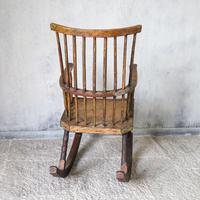
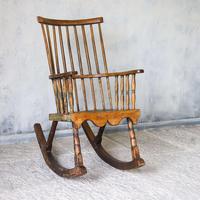
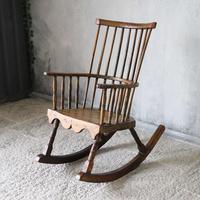
The photographs reveal the story embedded in its surface: the subtle undulations of the seat carved by hand, the soft gleam of ash polished by time, and the remnants of aged paint caught within the turnings. Each spindle shows the individuality of hand-turned craftsmanship, with small irregularities that speak to human skill rather than mechanical precision. The gently curving rockers, shaped from solid stock, retain the honest wear of use yet remain steady and balanced. Viewed from any angle, this chair possesses a sculptural beauty - the kind born of necessity, longevity, and grace. Our images form an essential part of the condition report for complete purchasing confidence, ensuring a true visual record of its character and craftsmanship.
Styling Suggestions:-
Displayed beside a hearth, within a reading nook, or in a modern interior with natural materials, this chair brings a quiet sense of history and craftsmanship to its surroundings. It pairs beautifully with antique textiles, rustic tables, or even minimalist backdrops - a statement of design endurance and authenticity. Its warmth and tactile presence make it both a decorative focal point and a usable, characterful piece.
Sustainable Style - Thank you for considering antique furniture - a choice that honours both design and the environment…in every sense, the most sustainable item is the one that endures
Sustainability begins with what already exists; this 19th Century Primitive Vernacular English Comb-Back Rocking Chair in Ash & Sycamore dating back to circa 1840 exemplifies the sustainable elegance of antique craftsmanship. Its continued relevance speaks to the timeless utility of well-made tools, and its survival ensures that restoration skills and historical knowledge remain alive and valued.
Purchase with Confidence:-
At White’s Antiques, every piece is described and photographed with care, ensuring complete transparency and confidence in your purchase. We are an established and successful business serving both trade and private collectors. You are warmly invited to visit our shop at 53 High Street, Arundel, and our Showroom at The Vinery, Poling, West Sussex, to experience our curated collections first-hand, explore the stories behind each antique, and appreciate these timeless treasures in person
measurements
Height:
105 cm
Width:
54 cm
Depth:
94 cm
declaration
White’s Antiques has clarified that the 19th Century Primitive Vernacular English Comb-back Rocking Chair - Ash & Sycamore (LA551656) is genuinely of the period declared with the date/period of manufacture being c.1840
condition
Lovely antique condition with age-related wear, surface marks, and vestiges of early paintwork, consistent with authentic 19th Century use - a richly patinated finish developed through decades of use.
additional info
Category:
Origin:
Date of Manufacture:
c.1840
location
This 19th Century Primitive Vernacular English Comb-back Rocking Chair - Ash & Sycamore is located in United Kingdom
Share:
A selection of items from White’s Antiques
White’s Antiques has 333 items available.Rare French 19th Century Chain Link Rocking Chair with Time-Worn Patina
£ 1,150
€1,338$1,527
White’s Antiques
19th Century English Country Pine High‑Back Settle Bench with Honey Brown Patina
£ 1,600
€1,862$2,124
White’s Antiques
Early 20th Century French Bobbin Rocking Chair with Colourful Striped Upholstery
£ 380
€442$505
White’s Antiques
Mid 19th Century English Carolean Style Wing Armchair with Provenance
£ 3,200
€3,723$4,248
White’s Antiques